From people analytics to workforce intelligence: Why banking needs a "data lake" for skills

In the world of European banking, the "social architecture" - the culture, the negotiations, and the headcount - has long been the primary focus of the human resources function. But as generative AI begins to reshape knowledge work, a new requirement is emerging. To survive this shift, banks must build a "technical architecture" for their people.
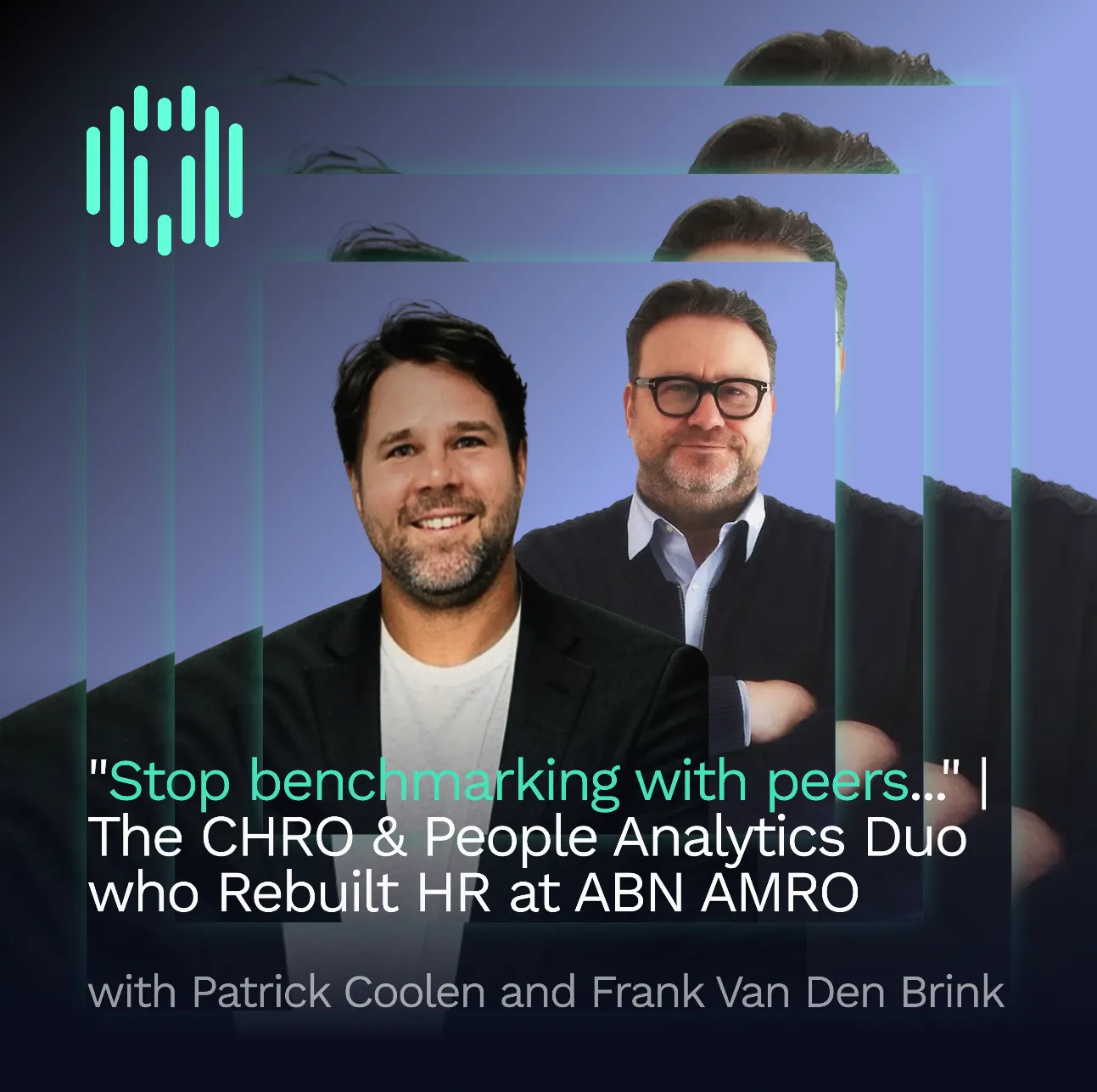
On a recent episode of the TechWolf podcast, Julius Schelstraete sat down with two architects of this movement: Frank van den Brink and Patrick Coolen. Having worked together at ABN AMRO, Frank as CHRO and Patrick as Head of People Analytics, they now advise global organizations through Kennedy Fitch.
Their message for the financial sector is clear: if you do not know your skills, you do not know your capacity to innovate. In a regulated industry, that isn't just an HR problem. It is a risk management failure.
The end of the "look at the neighbor" strategy
Historically, HR has been a function of benchmarks. Leaders often ask what their peers are doing before making a move. Frank van den Brink argues that this "social influence" muscle is precisely what holds banks back from true strategic workforce management.
"Buy what you need and deliver what is internally relevant," Frank says. "That is a far more useful muscle than looking for a benchmark."
The transition from people analytics (descriptive) to workforce intelligence (prescriptive) requires moving away from size, headcount, or FTE. In the AI era, two capable people providing strategic context are more valuable than a department of 100 that cannot.
Skills as a risk management asset
In banking, every major decision is filtered through the lens of risk and evidence. Yet, when it comes to the workforce, many organizations still rely on proxies like job titles or degrees rather than on what people can actually do.
Patrick Coolen defines strategic workforce management as a systematic, stepwise approach that starts with business strategy to understand what an organization needs to be good at.
"This is the product that helps you answer the question: is your workforce still fit for the future?" Patrick asks.
For a bank, "fit for the future" means understanding the gap between workforce supply and strategic demand. While HR has become better at taking a "photo" of today’s supply through analytics, the real struggle is making the demand visible. This requires a "data lake" of skills and tasks that allows leaders to see where human judgment is the edge and where AI can take the lead.
Beyond the "photo" of supply: Designing strategic demand
One of the greatest tensions in People Analytics is the imbalance between what we know about our people and what we know about our work. Patrick Coolen notes that HR is often excellent at taking a "photo" of the supply side, the current skills and demographics of the people already in the building.
The missing link is the demand side. Strategic workforce management fails when it stops at the photo. To be effective, the data must show what the organization needs to be good at over the next three to five years.
"You start with the business strategy," Patrick explains. "You look at what the organization needs to be good at, and then you see the gap."
For banking, this means identifying the specific capabilities required to navigate a turbulent AI era. It is not about filling seats. It is about identifying the delta between the skills you have today and the capabilities required by the strategy of tomorrow. Without this focus on demand, workforce planning remains a reactive exercise in headcount management rather than a proactive driver of innovation.
The CHRO as an anticipatory architect
The role of the CHRO is shifting from a jack of all trades to a strategic operator who manages the "human quotient" of the business.
The most successful leaders will be those who:
- Deduct complexity: Avoid over-engineered processes that do not solve business problems.
- Build a cockpit for decisions: Ensure the board has the best possible data to balance investment in technology with the development of people.
- Prioritize evidence over intuition: Use data to manage the "shop" of HR, being critical about whether recruitment or diversity practices are actually effective.
As Frank van den Brink puts it, the proof of value is created in the heat of the moment, not two years after a roadmap is drawn. For banking leaders, that moment is now.
Explore next:
Blog
From guides to whitepapers, we’ve got everything you need to master job-to-skill profiles.

You're preparing for the wrong AI event


The friction layer (Part 2): Why the most AI-exposed function isn't the most strained

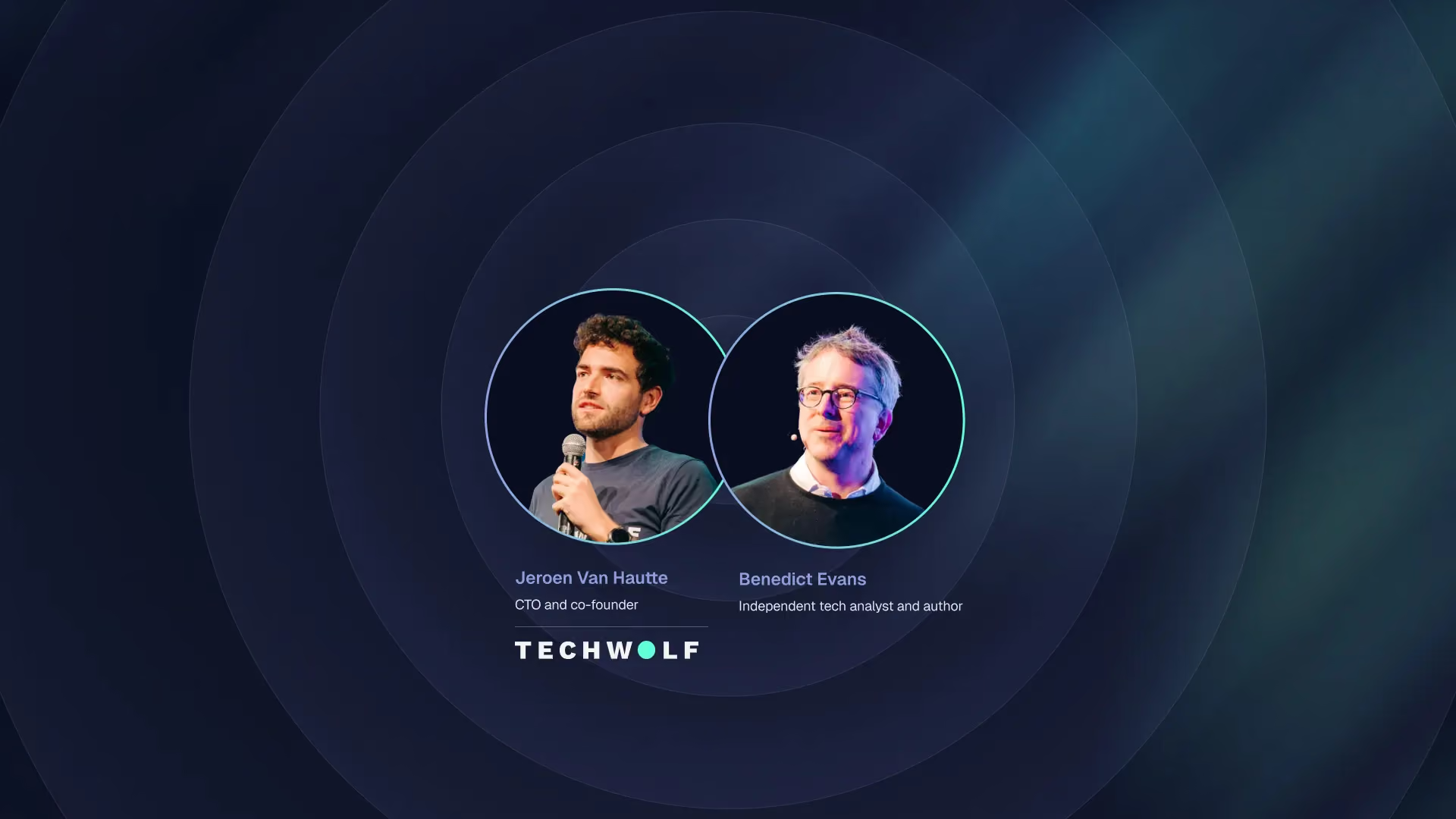
Reading the AI shift: our CTO Jeroen Van Hautte meets Benedict Evans