
Can we finally predict skills evolution?


TechWolf recently open-sourced the most granular public analysis of AI's impact on work: the Work Intelligence Index and the Skills Intelligence Index.
Our dataset consists of a decade worth of job postings, over 2 billion. We mapped 2,500 skills to 50,000 tasks across 20,000 distinct jobs at 1,500 companies.
The Work Intelligence Index measures AI impact at the task level, assessing each one using the Stanford Human Agency Scale.
Our AI research team went one step further and linked skills to tasks. That's what the Skills Intelligence Index unlocks: a fundamentally different way to understand skills disruption at scale.
This is an ongoing effort. We're not claiming better answers than anyone else, but we are letting the data speak. So... what does the data tell us?
The Skills Intelligence Index
The individual skills view answers the question: "What does AI transformation actually look like for one specific skill?"
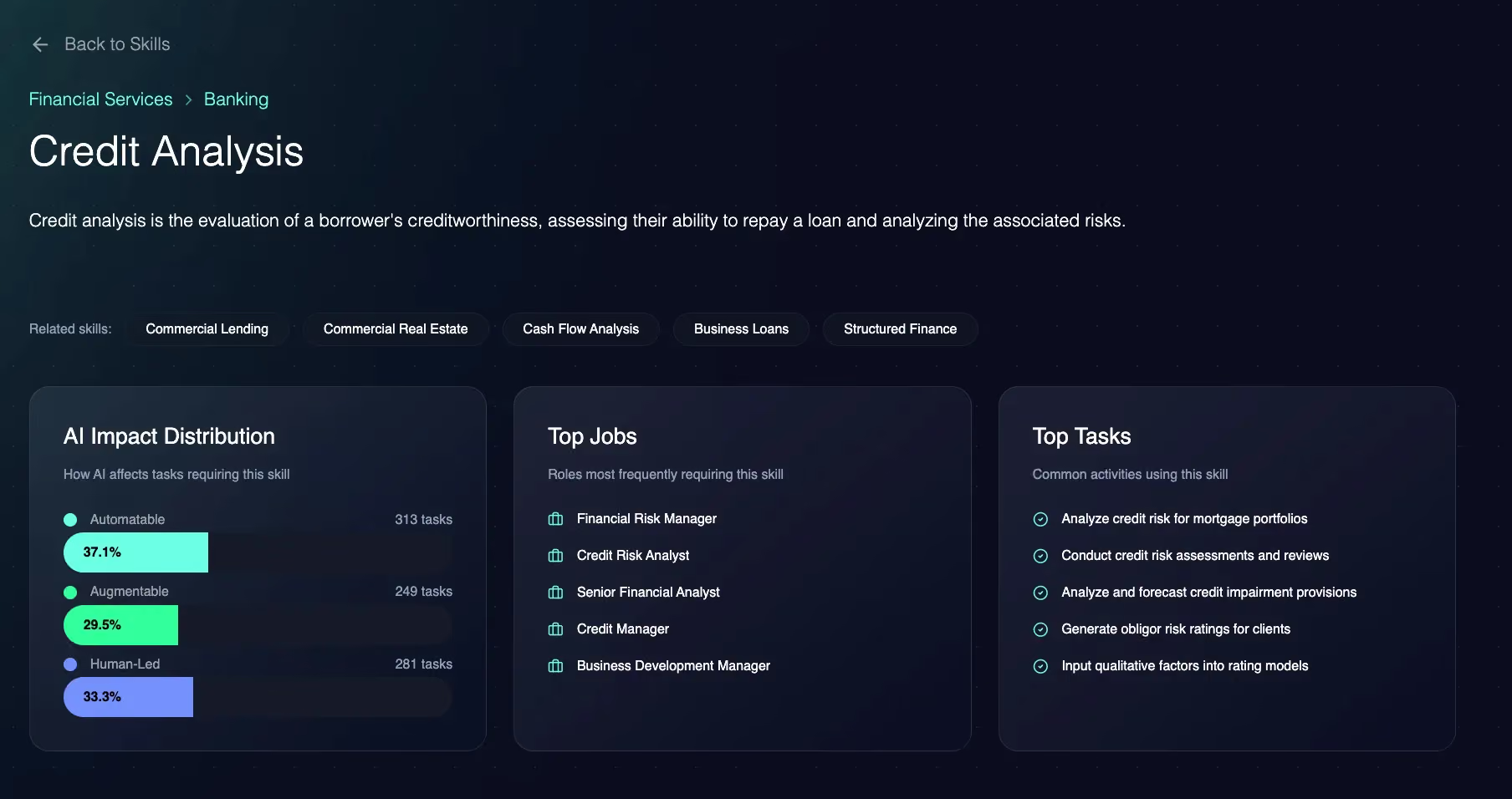
It takes one skill (example: credit analysis) and shows you exactly how AI will transform it. Not as a single number, but decomposed into 843 real tasks we found in the labor market.
- 37.1% Automatable: 313 tasks can be done by AI without human involvement. Think: pulling credit scores, running standardized risk models, flagging applications that clearly pass or fail thresholds.
- 29.5% Augmentable: 249 tasks best done as human-AI collaboration. Think: AI surfaces risk factors and anomalies, human analyst applies judgment on edge cases, complex business contexts, relationship considerations.
- 33.3% Human-Led: 281 tasks still require human primacy. Think: negotiating loan terms, explaining decisions to clients, handling novel situations without historical precedent, regulatory judgment calls.
Now How Do We Predict Future Skills?
Jeroen, TechWolf's CTO and co-founder, is nothing short of a genius. Among many other things, he has a freakishly good mathematical intuition. Competitive math was his sport growing up. He approached training for the International Math Olympiad as other people approached training for sports: with relentless discipline.
He looked at the data and saw something others missed. His first insight was choosing the right lens to look at the data. His second was recognizing the pattern.
Let me try and explain the mathematical intuition behind both, and how this can help us predict skills evolution.
Part 1: Visualizing the data in the right way
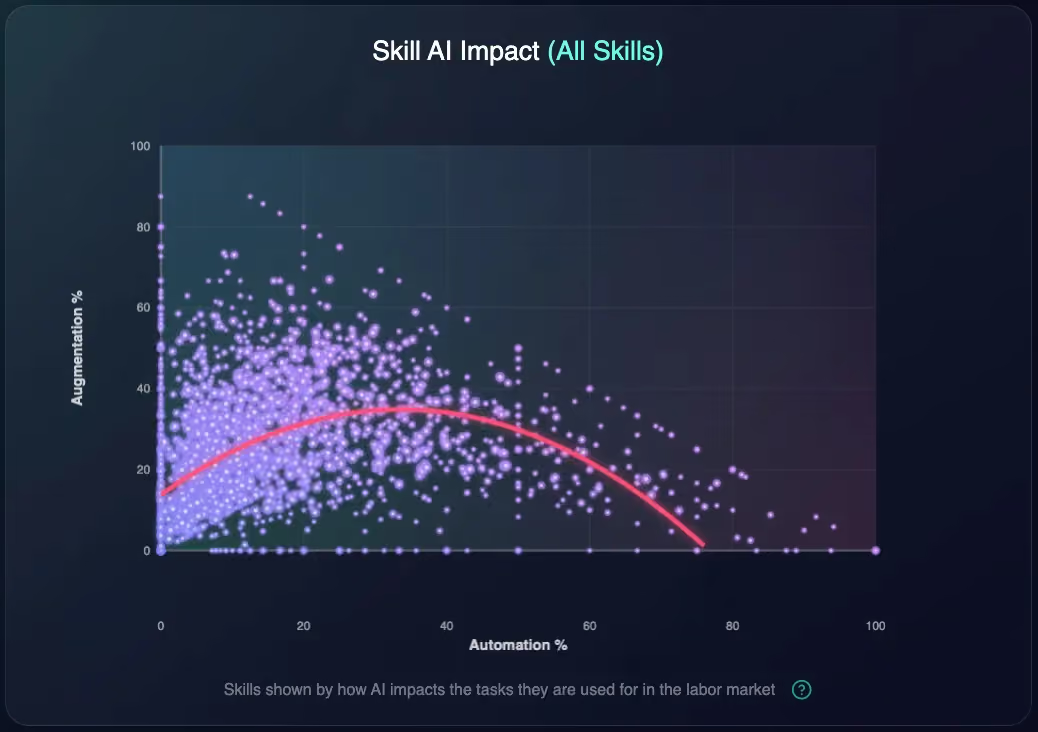
The right visualization came down to picking the right axes for the data.
Imagine every task in the world is done by some combination of humans, AI, and human-AI teams. As a result, the three percentages always have to add up to 100%.
Now, if we want to understand how AI is changing work, we should focus on the two ways AI participates: doing things alone (automation) or doing things with humans (augmentation). The "humans alone" part is just whatever's left over after robots got involved.
That’s why he mapped out the X axis as: the % of tasks that are automated, the Y axis as: the % of tasks that are augmented.
Part 2: Why the curve shows the future
Imagine taking a photo of a thousand butterflies at different stages of development. Some are still caterpillars, some are chrysalises (had to google this), and some are fully transformed. One picture catches them all at different stages.
That's essentially what the skills graph is. We're not watching one skill change. We're seeing thousands of skills at every stage of “robotification”, all at once.
The curve is like drawing the most common path through those stages. It shows the typical journey:
- Start: Humans do everything. AI doesn't help yet.
- Middle: AI becomes a really useful teammate. Peak collaboration.
- End: AI gets so good, the human steps back, and AI takes over.
The curve goes up then down because working with AI is often a phase you pass through on the way to AI working alone. Very similar to training wheels, helpful for a while, then you don't need them.
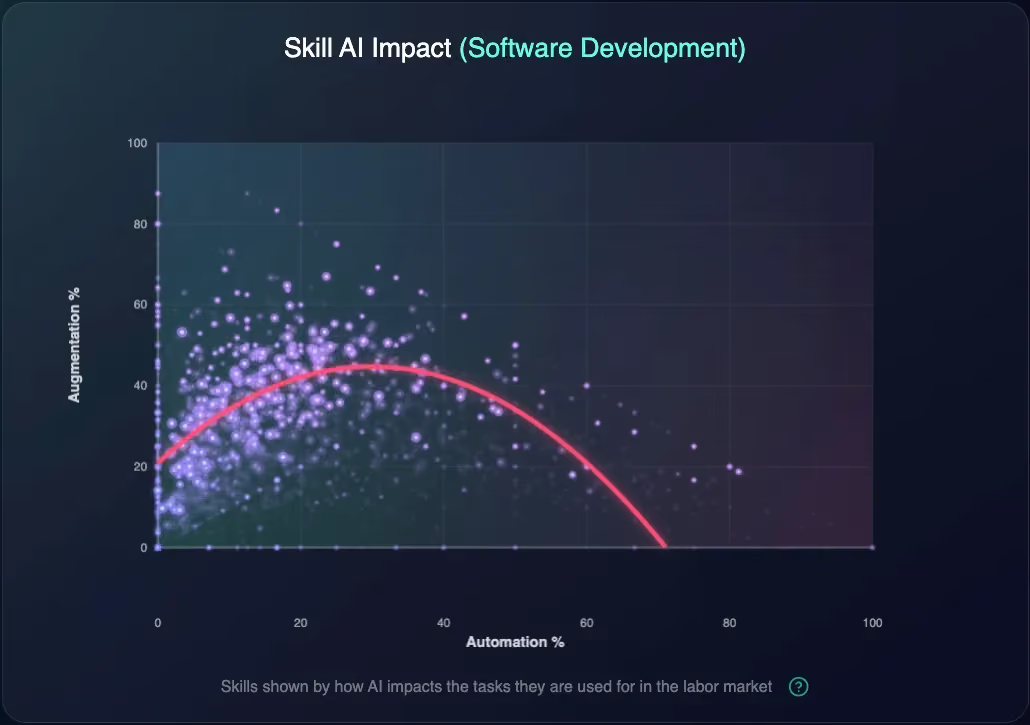
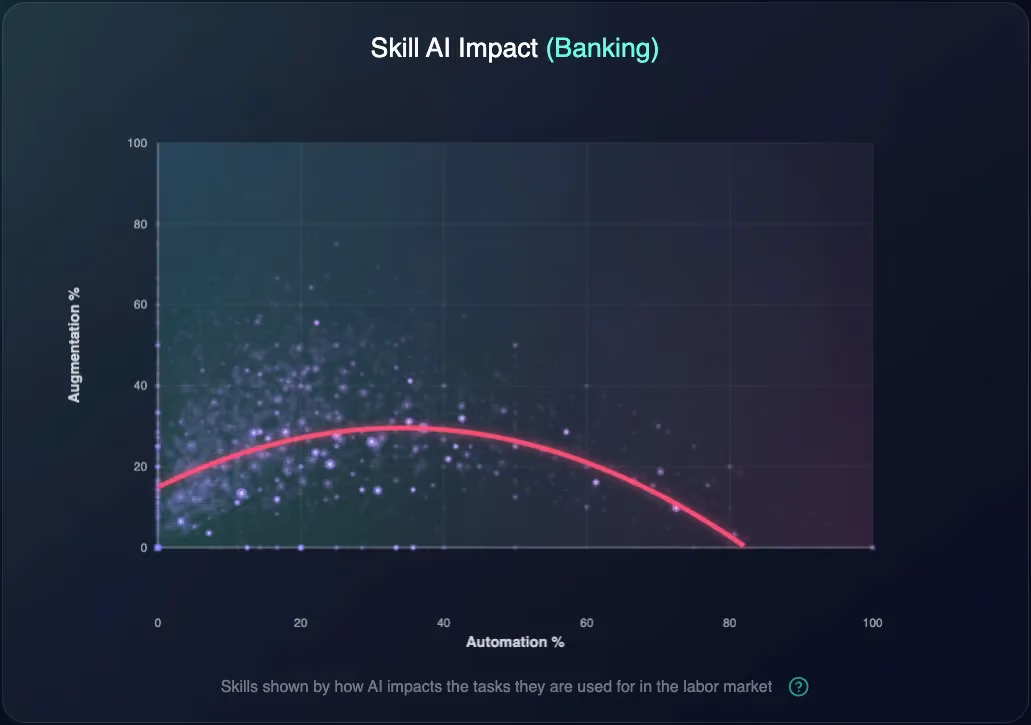
Different industries have different curves because some types of work stay in the "teamwork" phase longer. Creative work keeps humans in the loop. Rule-following work gets handed off to AI faster.
Let's look at two examples: Software Development skills and Banking skills
In Banking: When AI gets involved, it tends to take over more quickly. The collaboration phase is shorter and shallower. Skills move through augmentation relatively fast on their way to automation.
In Software Development: When AI gets involved, it stays collaborative longer. Human-AI teamwork is more durable. Skills spend more time in the productive "partnership zone" before (if ever) tipping into full automation.
This means the playbook for AI transformation isn't universal. Your playbook depends on the shape of your skills portfolio.
How are we applying this?
We're currently piloting this with nearly 10 of the most forward-thinking HR teams in the Fortune 500. These are leaders who see what's coming and refuse to be caught flat-footed.
They're asking the hard questions now: which skills should we develop, which roles need to be redesigned, and where can we redeploy talent before the market forces our hand?
We're testing whether this data can do what it's designed to do: inform real workforce decisions today, and ultimately accelerate reskilling at global scale. Over a billion workers who need clarity on where they're headed.
The opportunity is building an organization where people do genuinely meaningful work while AI handles the rest. That's the future of work, and these teams are building it today.
Blog
From guides to whitepapers, we’ve got everything you need to master job-to-skill profiles.


Start with the work: why Colt chose TechWolf to build its skills foundation


Getting skills right: Why demand and supply must always be on


The friction layer (Part 2): Why the most AI-exposed function isn't the most strained