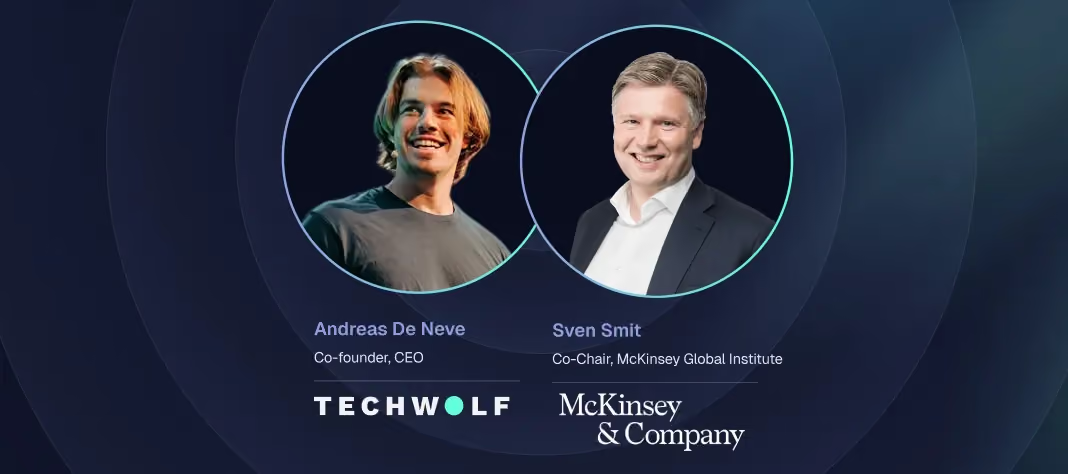
The CHRO’s mandate has changed: Time to lead the AI revolution

December 17, 2025
3 min read
Contents

The board is no longer asking if AI matters. They are asking where it hits the P&L next quarter.

For years, HR has fought for a seat at the table. Now, the table has moved to you. For the first time, the biggest business problem and the biggest HR problem are exactly the same. But while the driver is technological, the solution is human.

Most enterprises are currently making billion-dollar infrastructure investments while flying blind on the human side of the equation. They can tell you how many GPU clusters they are provisioning, but they cannot tell you which roles are most exposed to disruption or where the productivity gains will actually come from.

The physics of productivity are changing.The skills required to drive business outcomes are now changing faster than the business cycle itself. This makes workforce strategy indistinguishable from business strategy.

We believe this is HR’s golden moment. It is time to stop managing headcount and start managing capability.

Why it's HR's time to lead

Stop managing headcount and start managing capability. Download the CHRO's playbook for the AI era.

Download
Download

Blog

Relevant sources

From guides to whitepapers, we’ve got everything you need to master job-to-skill profiles.
View all
View all
AI transformation
HR Transformation
Blogpost

McKinsey x TechWolf on AI, agents, and the next decade of work

McKinsey's Sven Smit and Anu Madgavkar make a counterintuitive case: as AI automates more work, large economies will hit a people shortage, not a surplus, thanks to demographic decline and the new demand that automation unlocks. In our conversation, they break down why "soft skills only" is dangerous advice for young workers, why the fastest learner (not the best planner) wins, and why task-level optimization is a trap when workflow redesign is the real strategic unlock. A must-listen for CHROs planning the next five years of hybrid, human-plus-agent teams.
Julius Schelstraete
Apr 23, 2026
McKinsey x TechWolf on AI, agents, and the next decade of work
AI transformation
HR Transformation
Article

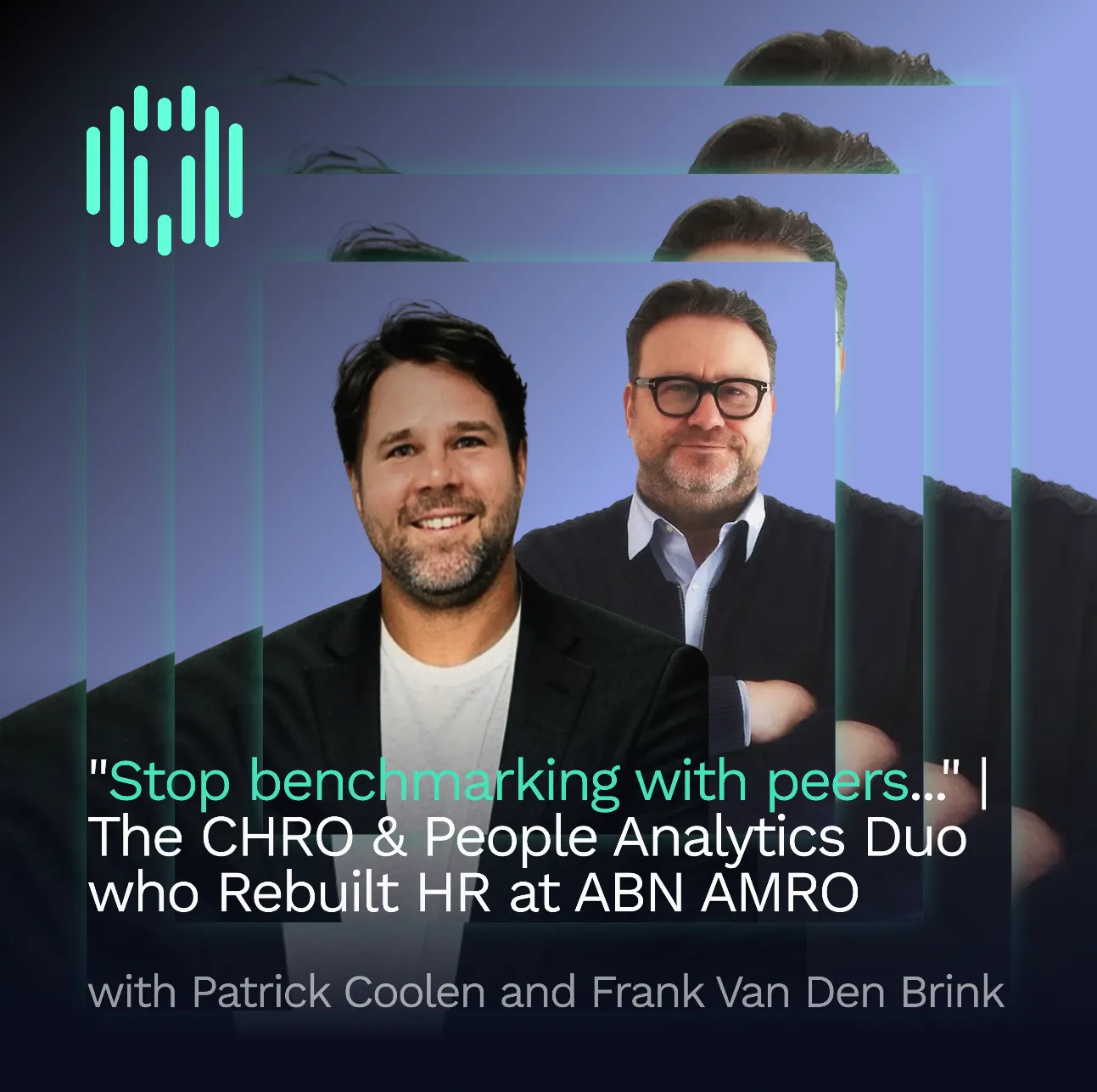
From people analytics to workforce intelligence: Why banking needs a "data lake" for skills

In a regulated industry like banking, failing to identify internal skills is a risk management failure. Former ABN AMRO leaders Frank van den Brink and Patrick Coolen argue that banks must move beyond "social architecture" toward a "technical architecture" for their people. This transition from descriptive analytics to prescriptive workforce intelligence requires a "data lake" of skills to bridge the gap between today’s supply and tomorrow’s strategic demand. The article challenges CHROs to stop benchmarking peers and start building as "anticipatory architects" who prioritize business outcomes over HR for HR.
Julius Schelstraete
Feb 24, 2026
From people analytics to workforce intelligence: Why banking needs a "data lake" for skills
AI
AI transformation
Blogpost

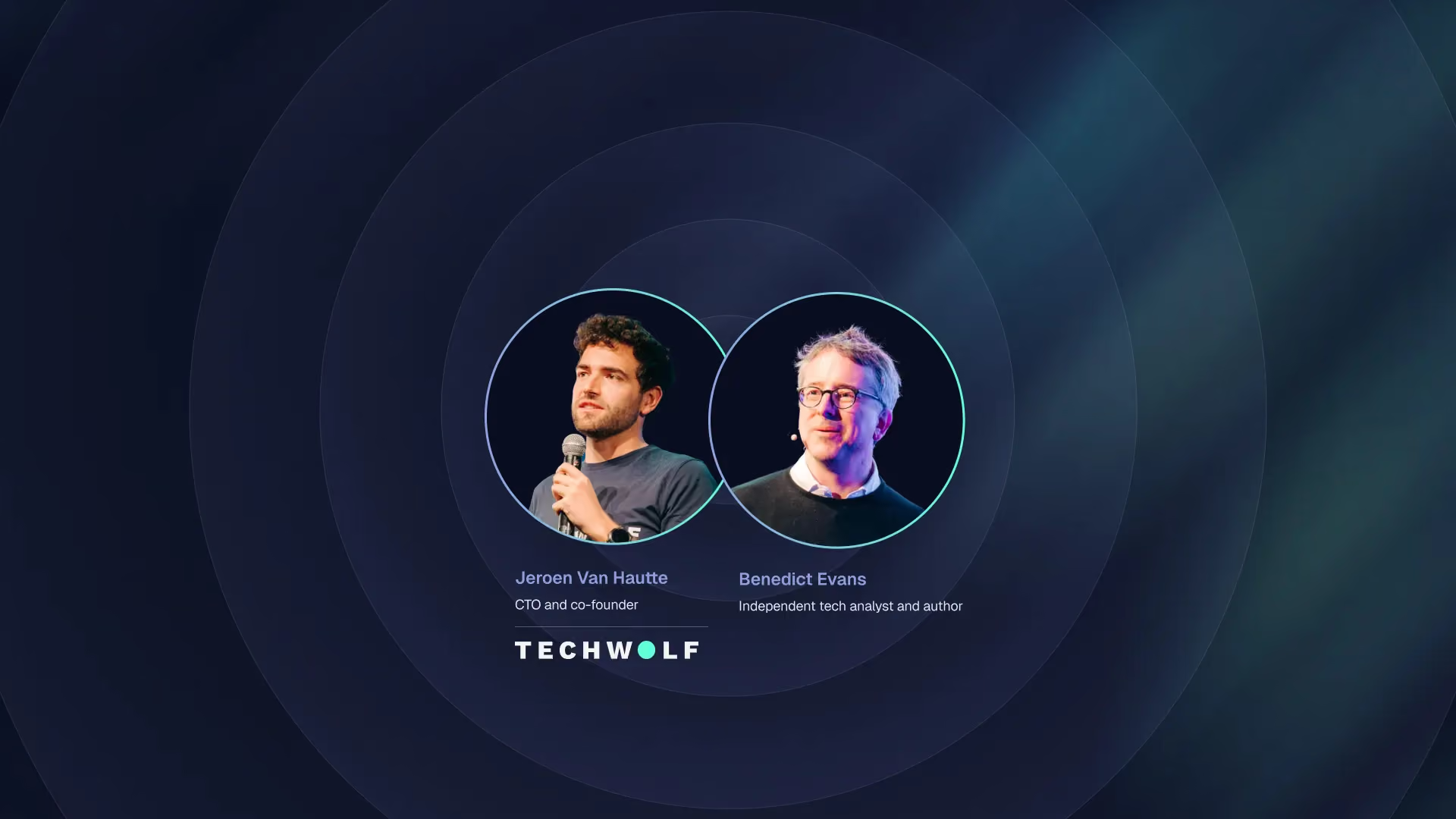
Why we’re open-sourcing our AI-First bootcamp

We ran our first AI-first bootcamp at TechWolf : two days re-engineering real work with the best tools available. The questions kept coming, so we decided to open-source the playbook. Here’s why, and what we learned.
Jeroen Van Hautte
Feb 23, 2026
Why we’re open-sourcing our AI-First bootcamp

Using AI while interviewing at Techwolf

At TechWolf, we see generative AI as part of the modern toolkit — and we expect candidates to treat it that way too. We love it when people use AI to take their thinking to the next level, rather than to replace it.You are welcome to use tools like ChatGPT, Claude, or others during our interview process, especially in take-home assignments or technical exercises. We encourage you to bring your full toolkit — and that includes AI — as long as it reflects your own thinking, decisions and creativity.We don’t see AI as replacing your skills. Instead, we’re interested in how you use it: to brainstorm ideas, speed up iteration, validate your thinking, or unlock new ways of approaching a challenge. Great candidates show judgment in when to rely on AI, how to adapt its output, and where to go beyond it.

What we’re looking for:

Our interviews are designed to understand how you think, solve problems, and express ideas. Using AI in a way that amplifies those things — not masks them — is encouraged.

What to avoid:

We ask that you don’t submit AI-generated work without review, or present answers that you can’t fully explain. We’re not testing the model — we’re getting to know you, your skills, and your potential. If there are cases where we don’t want you to use AI for something, we’ll tell you ahead of the interview being booked.In short: use AI as you would on the job — as a smart assistant, not a stand-in.

Example: Programming with AI

In a coding challenge, you’re welcome to use generative AI to support your workflow — just like you might in a real development environment. For instance, you might use AI to quickly generate boilerplate code, look up syntax, or get a first-pass solution that you then adapt and debug collaboratively. What we’re interested in is your ability to reason through trade-offs, communicate clearly, think about complexity and iterate effectively — not whether you memorized the syntax perfectly. If using AI helps you stay in flow and focus on higher-level problem-solving, we consider that a strength. There could be some challenges where we won’t allow you to use AI - in that case we’ll tell you in advance, and will tell you why.

Heading

Contents

Heading 1

Heading 2

Heading 3

Heading 4

Heading 5
Heading 6

Lorem ipsum dolor sit amet, consectetur adipiscing elit, sed do eiusmod tempor incididunt ut labore et dolore magna aliqua. Ut enim ad minim veniam, quis nostrud exercitation ullamco laboris nisi ut aliquip ex ea commodo consequat. Duis aute irure dolor in reprehenderit in voluptate velit esse cillum dolore eu fugiat nulla pariatur.

Block quote

Ordered list

  1. Item 1
  2. Item 2
  3. Item 3

Unordered list

  • Item A
  • Item B
  • Item C

Text link

Bold text

Emphasis

Superscript

Subscript