Why “skills-first” projects are failing, and what actually works


Overview
Many organizations are stuck in “skills-first” projects that generate data but not decisions.
This piece argues that the problem isn’t skills themselves, but how they’re positioned. When skills are treated as a technical HR initiative, momentum fades. When they’re framed as a business operating system, tied to strategy, work design, and AI impact, they start to matter.
Drawing on interviews on the TechWolf Podcast with leaders at Harvard Business School, HSBC, Sanofi, Genesys, Merck,... this article explores:
- Why most skills transformations stall before delivering business value
- Why storytelling, not dashboards, is the real infrastructure for workforce intelligence
- What CHROs can do now to move from skills hype to intentional work redesign
The core message is simple: in the AI era, the competitive advantage is not having skills data. It’s learning from it faster than everyone else, and using it to actively shape how work evolves.
The end of the “skills-first” project
For years, HR has sold the idea of the skills-based organization as a destination.
In practice, most efforts have stalled.
The problem isn’t intent. It’s framing.
As Harvard Professor Joseph Fuller told us on the TechWolf Podcast, skills-based organizations remain more aspiration than reality. Not because leaders don’t believe in them, but because the tools, and the operating logic behind them, are only now being understood.
Many transformations fail for a simpler reason: skills are treated as a data project, not a business operating system.
Dashboards get built. Taxonomies get refined. Momentum fades.
The organizations that make progress don’t start with better data.
They start with a better story.
Storytelling is the missing infrastructure
Across our conversations with leaders at Sanofi, HSBC, and Merck, one success factor came up again and again: the ability to tell a simple, repeatable story about why workforce intelligence matters.
This is not a soft skill. It’s a prerequisite.
Work intelligence is abstract. Skills, tasks, and capability shifts are invisible to most business leaders. Without a narrative, even high-quality data stays ignored.
Our founder Mikaël Wornoo described strong HR leaders as translators. First, they translate raw data into HR meaning. Then they translate that into business relevance. Without both steps, insight never turns into action.
Rob Etheridge, Group Head of Workforce Strategy at HSBC, learned this the hard way. Progress didn’t come from a big launch. It came from sustained storytelling over time, keeping momentum alive while the work happened quietly in the background. Because when the work is abstract, understanding must come before buy-in.
Speak the language of the business, not HR
If you want executive sponsorship, stop leading with “skills”.
Start with outcomes.
Lisa Brockman, Talent Management Director at Genesys, put it plainly: people don’t care about skills. They care about what skills change. For employees. For teams. For results.
Guillaume Lavoix, Global Skills Intelligence Lead at Sanofi, saw traction only when the conversation was anchored to a concrete business shift. In their case, a strategic move toward R&D and innovative drug development. Once framed that way, leaders asked a different question: “Wait, we don’t already have this data?”
That moment matters. It signals a shift from HR curiosity to business dependency.
When skills are positioned as an enabler of strategy, not an HR initiative, the conversation changes naturally.
What leaders should do next
To move from a stalled project to a real transformation, the pioneers do three things differently:
Find your hero cases
Start with business leaders who are already motivated. The ones with a real talent constraint or delivery risk they need to solve now.
Narrate the data
Do not show dashboards in isolation. Explain why a small set of critical capabilities determines future competitiveness.
Design for agility
Treat skills and tasks as the currency of a dynamic organization, one that can redeploy talent toward the work that matters most.
Harvard Prof. Joseph Fuller summed up the urgency clearly: those with the most data, who learn from it fastest, win. In the AI era, the bigger risk is not getting it wrong. It’s moving too slowly.
Discover the Workforce Intelligence Index
To explore the Workforce Intelligence Index in detail, visit the index here.
Blog
From guides to whitepapers, we’ve got everything you need to master job-to-skill profiles.

You're preparing for the wrong AI event


The friction layer (Part 2): Why the most AI-exposed function isn't the most strained

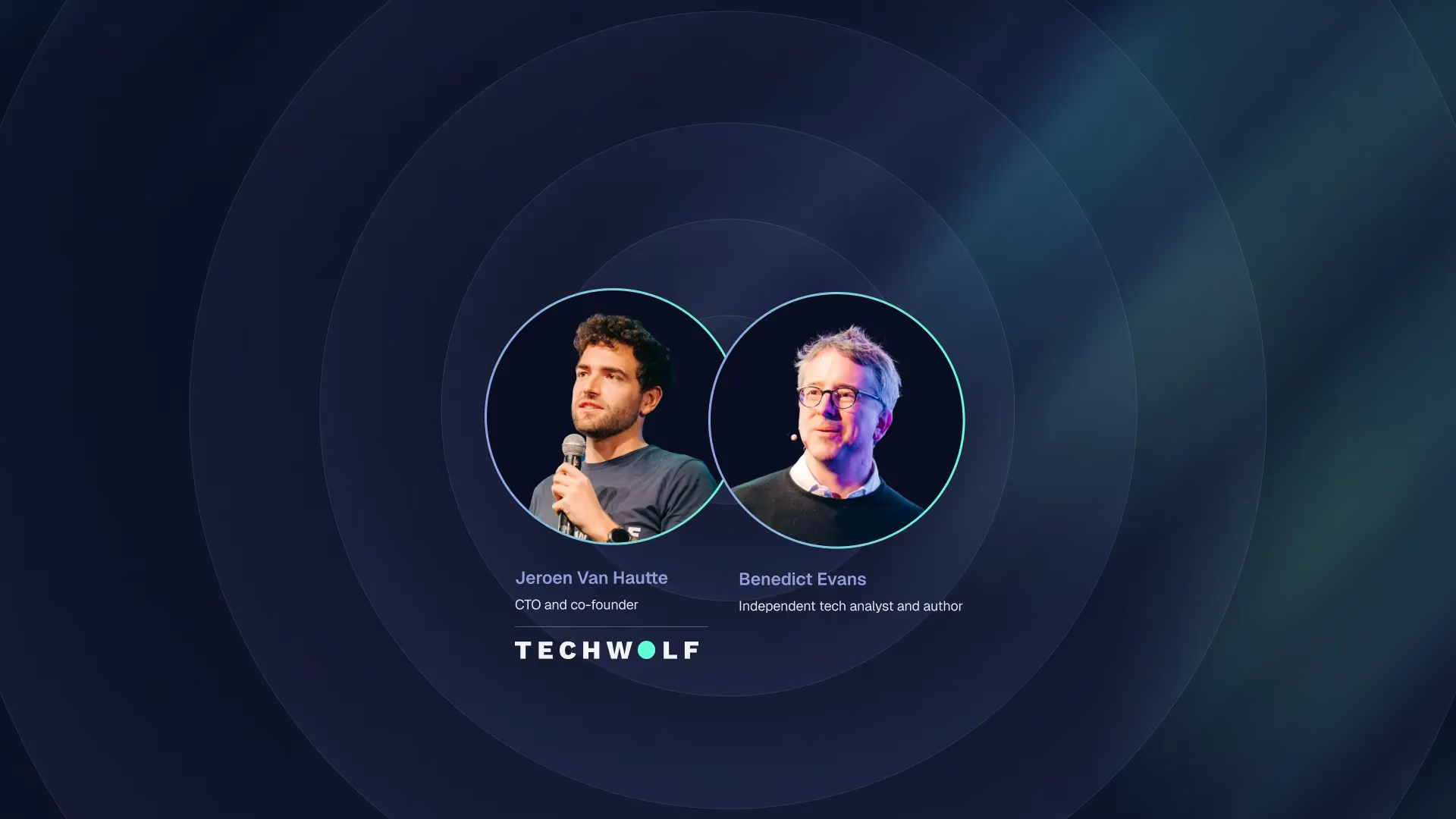
Reading the AI shift: our CTO Jeroen Van Hautte meets Benedict Evans