HR's time to lead, and the data to do it: our UNLEASH Paris 2026 takeaways

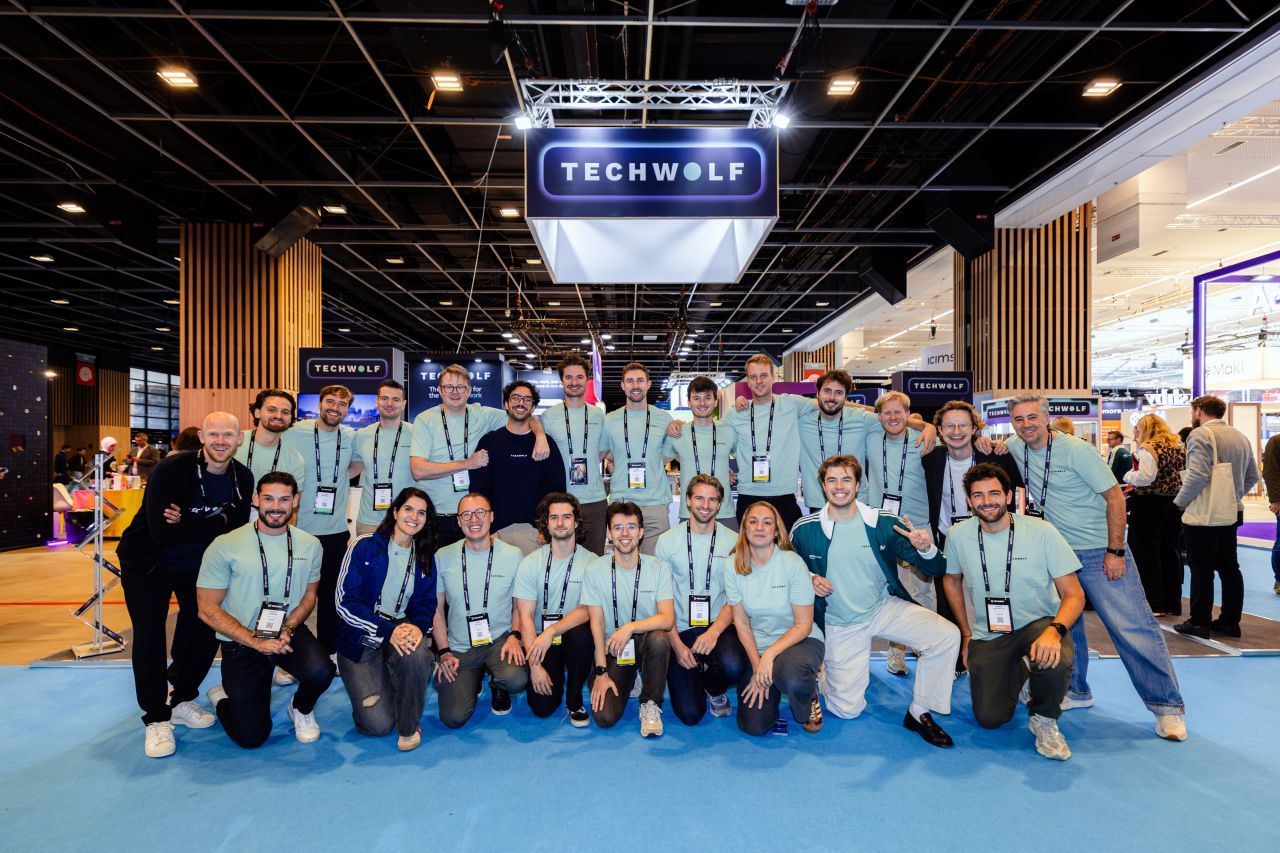
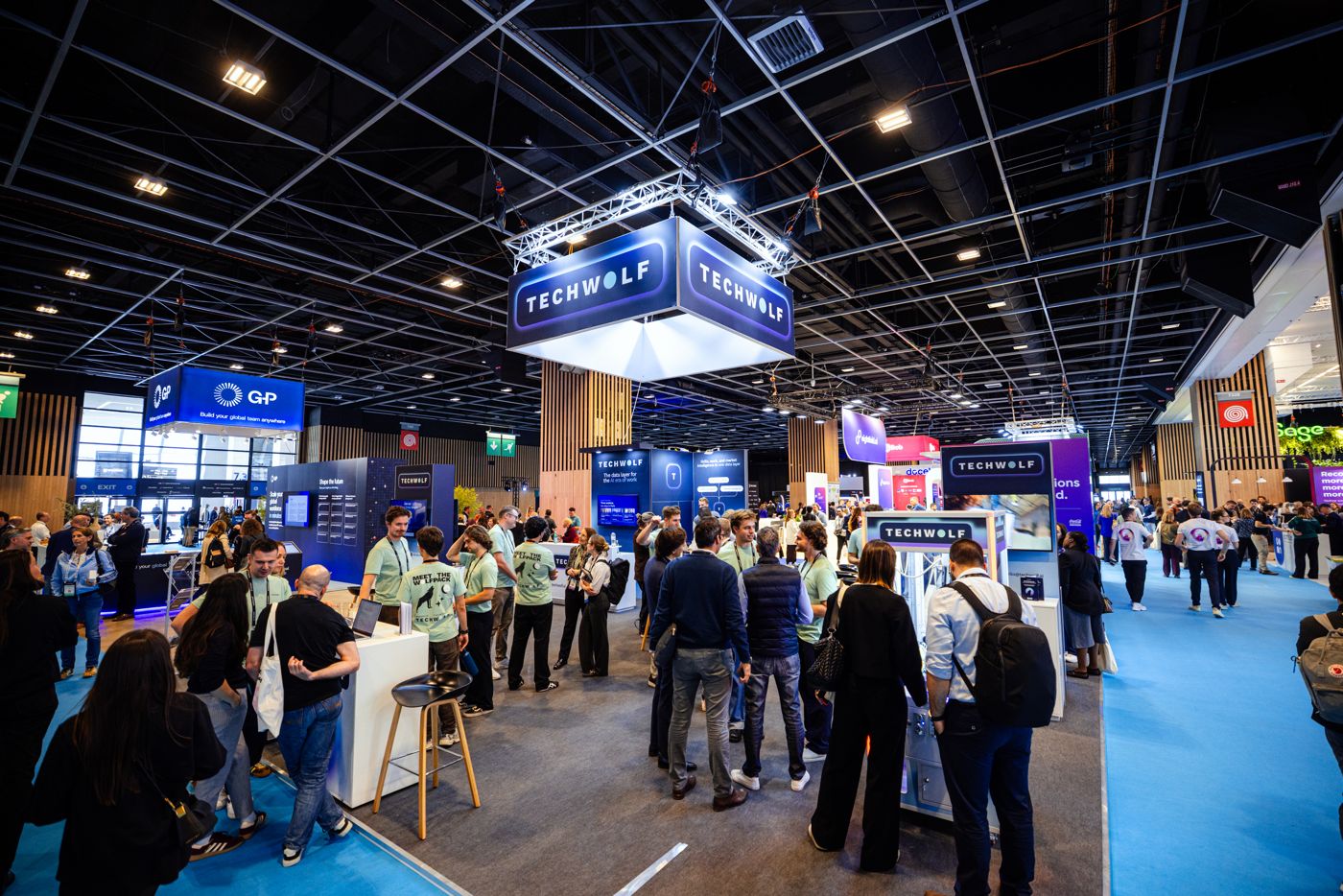
Last week, 23 Wolves joined 8,500 HR and work tech leaders at Paris Expo Porte de Versailles for UNLEASH World 2026. Over three days we spoke on four stages, welcomed HR leaders at booth 402 and closed the busiest day with drinks at Le Perchoir.
One theme kept coming back. AI is ready to change how work gets done, and HR is in a strong position to lead that change. But only if the data underneath can be trusted.
You could see it in the agenda itself. A few years ago, UNLEASH was about well-being, hybrid work and the Great Resignation. Then generative AI arrived, and the conversation turned to experimentation and responsible use. Last year, skills-based organisations and internal mobility took centre stage. This year, the agenda had moved again: agentic AI, work redesign, human-AI workforce planning and governance. The question is no longer whether AI will change work, but who designs that change and on what data. Here's what stuck with us.
1. HR's Time to Lead Is Here. So Is the Data.

Yasamin Karimi opened her Product Spotlight on the Impact Stage with the idea behind our Fall launch: AI agents are already doing real work inside companies, but very few organisations have the foundation to redesign work around them.
“Everyone has access to powerful agents now. What's missing is trusted data about the work itself: what people do, which skills they use, and where AI can help. That's what makes an agent worth trusting.”
Yasamin Karimi, Chief Product Officer, TechWolf
That gap came up all week in Paris. HR teams have Copilot, ChatGPT and Claude in their hands, and they're using them to plan headcount, map roles and test redesign scenarios. But an agent is only as good as the data it's given. Without a governed view of the work and skills inside the company, its answers are generic at best and wrong at worst.
One line we heard more than once in Paris: there is no AI transformation, only business transformation. AI doesn't change an organisation on its own. It changes the work, and the work only changes well when someone has redesigned it on purpose. Companies that buy dozens of agents before they have the architecture to support them end up paying twice: once for the agents, and again to fix the decisions those agents make on incomplete data.

Our answer is to bring that context to the agents teams already use, rather than adding another tool. TechWolf delivers trusted, governed work and workforce data through MCP into the agents, HR systems and everyday business tools people already work in, Excel included. The result is agents you can trust: they reason over what's actually happening in your organisation, not over a guess.
For HR, this changes the role. Instead of owning yet another dashboard, HR owns the data that every AI-driven workforce decision depends on. That's why we think HR's time to lead is here.
2. Atlas Copco: get the data right first, then build on it

On Thursday, Jessica Clarke, Group VP Talent and Learning, and Naomi Persoone, HR Digitalization Lead, took the Skills stage for "Unlocking the Skills-Enabled Organization". They shared how Atlas Copco Group put skills to work across more than 55,000 people in over 70 countries, in a decentralised organisation. And they didn't wait for a finished skills framework before getting started.
The starting point will sound familiar to most HR leaders. The ambition was there, but skills data was spread across disconnected tools, unstructured and inconsistent. Time-to-fill for key roles was going up, internal mobility was underused, and skills mismatches were growing.
So Atlas Copco fixed the foundation first, in three steps:
- Build trusted skills data. TechWolf inferred skills from the HRIS, learning data and CVs, then benchmarked them against external labour market data. The result is a living skills map written in Atlas Copco's own language.
- Link skills to jobs. Every job was connected to the skills it needs. A cross-functional core team and business leaders shaped the use cases around real pain points, not abstract frameworks.
- Bring skills to where people work. No new tool for employees. The skills language flows into the systems Atlas Copco already uses, with a Skill Assistant in Microsoft Teams so people can update their profiles in the flow of work.
Within months, every job had a skills profile and the first recruitment pilots were live. Pilot recruiters saw more qualified and more diverse candidates once they moved from title-based to skills-based sourcing. Next up is a pilot with close to 2,000 sales and marketing employees.
The audience's questions afterwards came back to the same point: this was a practical use case, not a theory. What stood out was the order of things: trusted data and a shared language first, use cases anchored in business pain second, technology that stays out of the way third.
Read the full story: Atlas Copco Group x TechWolf: laying the foundation for skills-based talent agility
3. The giants of HR tech are being redrawn
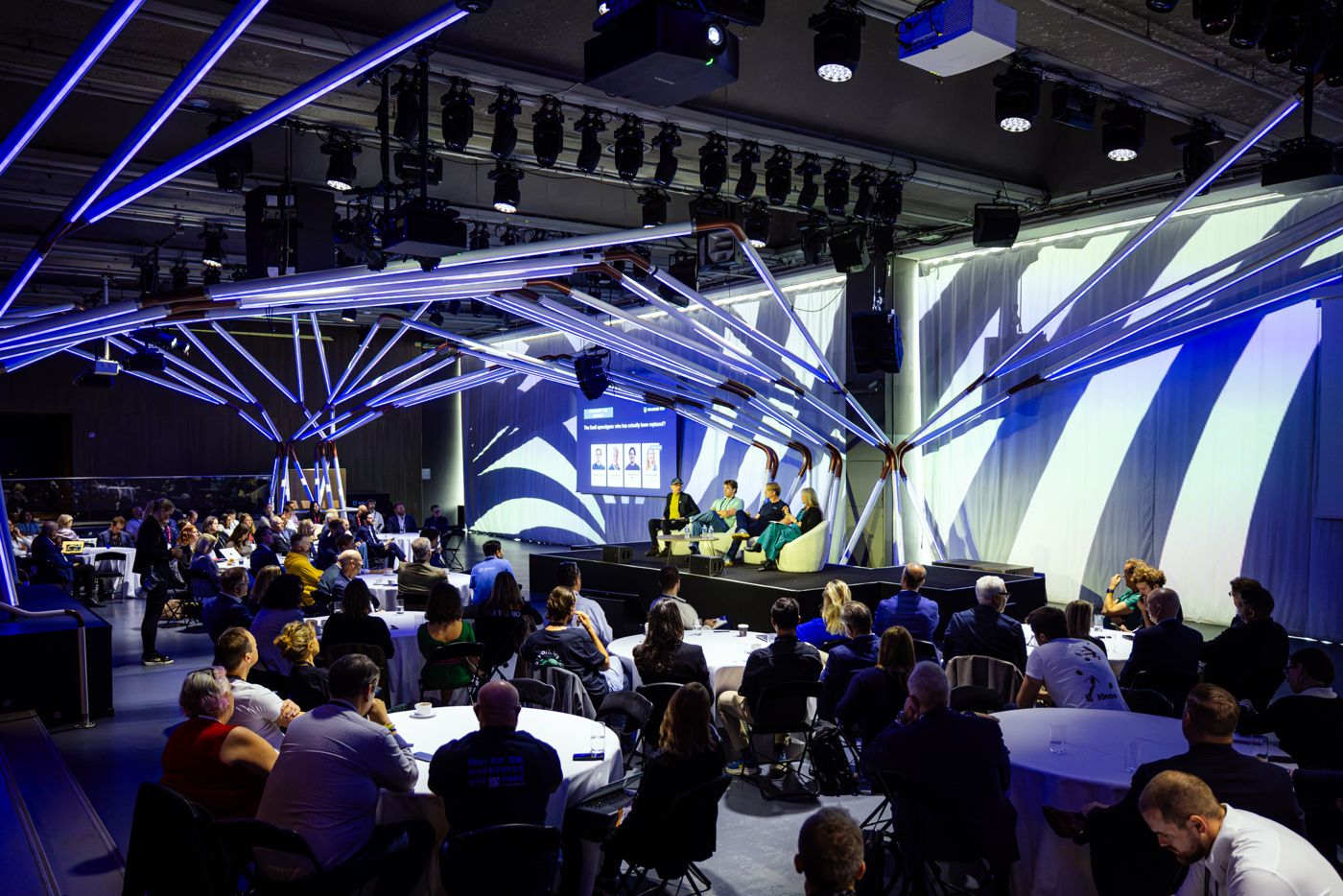
On Wednesday morning, Andreas (Dre) De Neve joined Thomas Otter (Acadian Ventures) and Chris Bruce (Origin) at the invite-only UNLEASH 100 Summit to discuss the so-called SaaS apocalypse: what AI is changing in HR software, and what it is likely to replace.
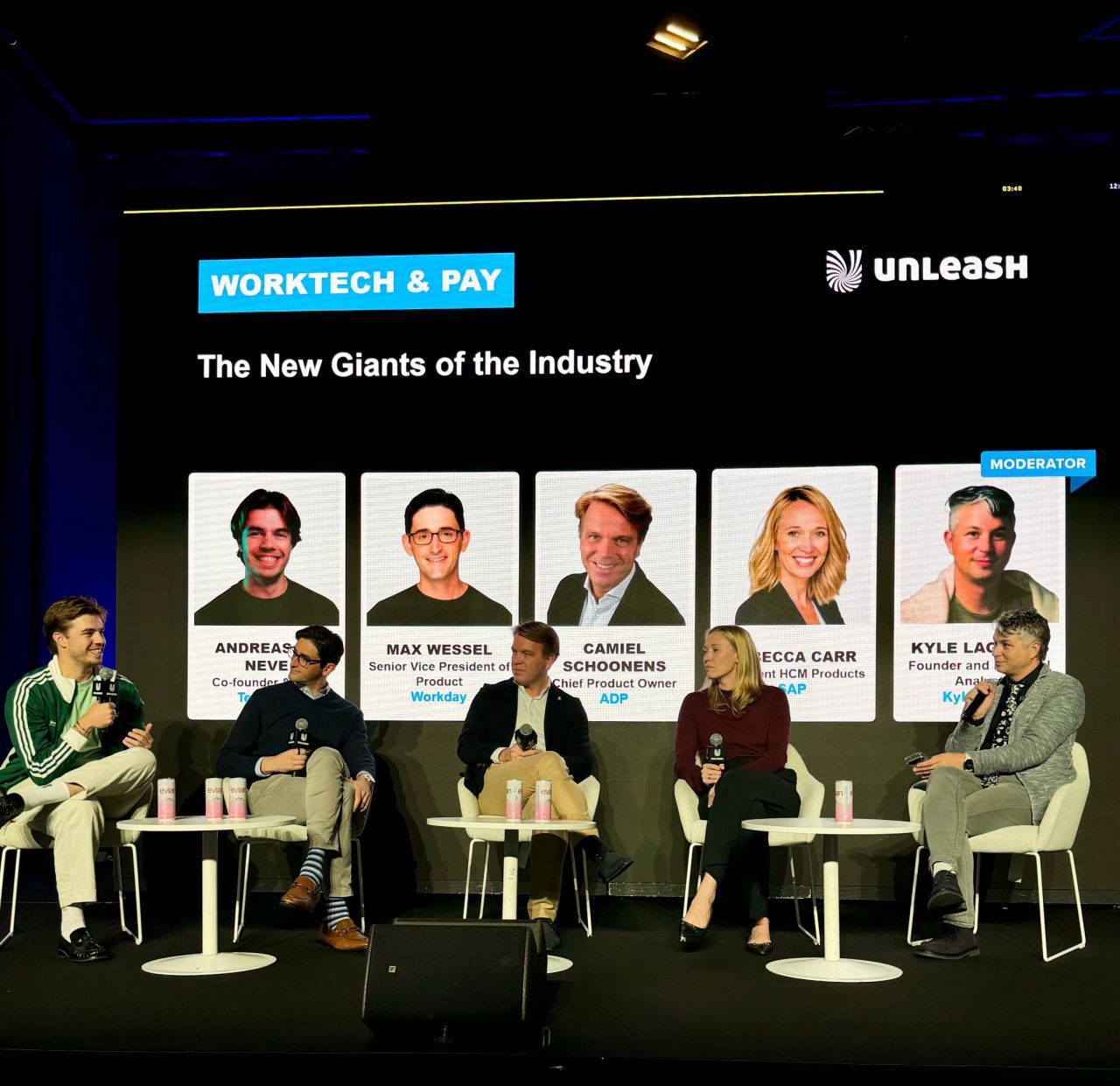
On Thursday, Dre continued the conversation on the WorkTech stage in "The New Giants of the Industry". He was joined by Max Wessel, Senior Vice President of Product at Workday; Camiel Schoonens, Chief Product Owner at ADP; and Rebecca Carr, President, HCM Products at SAP. Kyle Lagunas, strategist, analyst and advisor at Kyle & Co., moderated. For decades, HR tech leaders won on scale, depth, data and control. The panel brought competitors, colleagues and partners together on one stage to debate who leads next.
Going into the session, Dre set the bar for what leadership should mean in this new era:
“We need leaders who are building solutions that actually provide value, are intuitive, and are honest about what they solve and more importantly, what they don't.”
Andreas De Neve, Co-founder and CEO, TechWolf
Kyle summed up the discussion afterwards:
“The world is changing right before our eyes, and HR has an incredible opportunity to lead what comes next. But finding the right partners and making the right bets will both play massive roles in who rises above and seizes this moment.”
Kyle Lagunas, Strategist, Analyst and Advisor, Kyle & Co.
The conversation came a few weeks after SAP announced its intent to acquire TechWolf. The deal is expected to close in Q4 2026, subject to regulatory approvals. Rebecca Carr described what she sees in the team:
“TechWolf built a great product and team around the deep conviction that better business decisions only happen when one has a strong understanding of their work, their workforce, and their teams. They've built a context graph for work that connects job level tasks, the skills behind those jobs, and an understanding of how the labor market is shifting.”
Rebecca Carr, President, HCM Products, SAP, and CEO, SmartRecruiters
4. Skills belong where the work happens

The same message came up at the booth and on the floor: HR leaders don't want another platform to log into. They want skills and work data to show up inside the tools their people and their agents already use.
On Wednesday afternoon, Daniel Torrens welcomed the Skills at Scale Explorer Tour to booth 402, where around 25 HR leaders from large enterprises stopped to hear how skills intelligence helps organisations understand their workforce. At the booth, the questions had moved on from "what is a skills taxonomy?" to "how do we get this data into our agents and workflows, and how do we govern it?"
Underneath all of it is a shift from skills to work intelligence. Skills tell you what people can do. Work intelligence tells you what actually needs doing: the tasks inside every role, how much of each AI can take on, and who or what should perform it. That's the view HR needs to redesign roles with confidence, and the view agents need to give answers you can act on.
See you at the next one
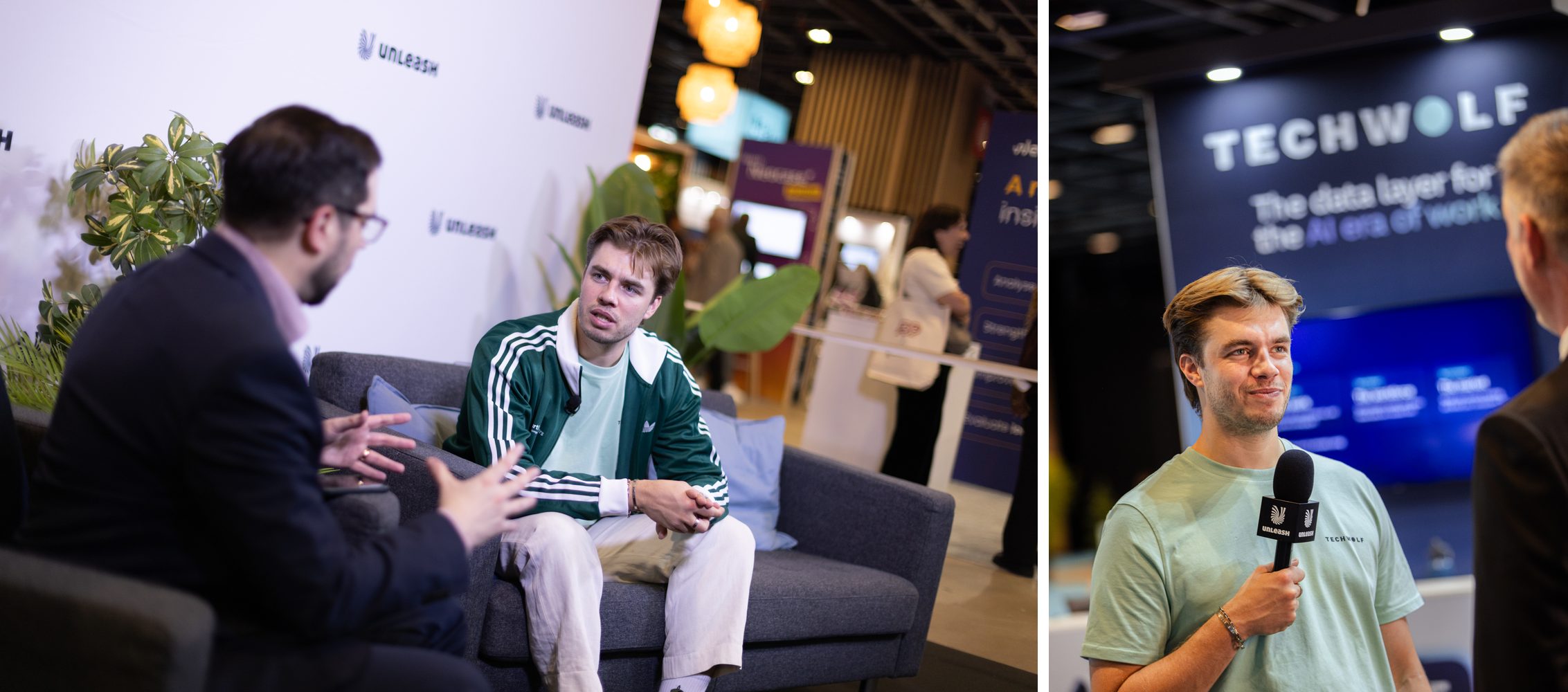
Thank you to everyone who stopped by booth 402, joined our sessions or raised a glass with us at Le Perchoir.
Want to see how trusted work and skills data can power the agents your teams already use? Let's talk
Fall 26 Launch: Agents you can trust
Your agents are fast and smart, but they don't know your workforce. See how we bring Skills, Work and Market Intelligence into the agents and tools your teams already use, so you can redesign work and plan your workforce on data the whole organisation trusts.
Blog
From guides to whitepapers, we’ve got everything you need to master job-to-skill profiles.
HR's time to lead, and the data to do it: our UNLEASH Paris 2026 takeaways

AI is saving time everywhere and money nowhere

Start with the work: why Colt chose TechWolf to build its skills foundation