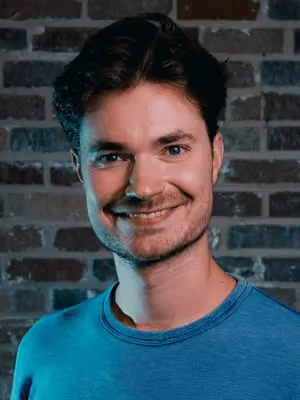
Mobility series: JD, from Belgium to New York to San Francisco


Meet Jordan Dawn (JD) De Laender, Implementation Consultant on our Professional Services team. Same role, same customers, three offices, two continents, two years. She joined us from Deloitte, spent a few months with the presales team in London, moved to New York, and is now part of the landing team for our new San Francisco office.
This is the first post in our Mobility series: what it actually takes to move teams, offices, and continents inside a company that's still building itself. We sat down with JD before she flew west.
Say yes to opportunities. I used to be an overthinker, always working out how something could go wrong. Now I take the leap. Less overthinking, more yes.
Walk us back to Deloitte. What were you doing there, and what made you consider leaving consulting for a company like TechWolf?
Deloitte was my first job out of university. I grew into a senior consultant implementing SAP's learning and recruiting modules, and later into the subject-matter expert role, which meant that if a customer anywhere in the practice had a learning and development case, it came to me. I'd answer the questions and connect them with the team who could build it.
TechWolf wasn't an unknown name to me. Inside Deloitte, you saw it pass by quite often.
What would you tell a consultant right now who's never heard of us?
That the product moves, and that it's spot on for what the HR world is actually looking for. In consulting, the modules already exist and your job is to implement them well at one customer after another. Here you look at the product and shape it to fit the customer's use case. That's the real difference.
You can come back with something that changes the product. You're building the rocket ship together.
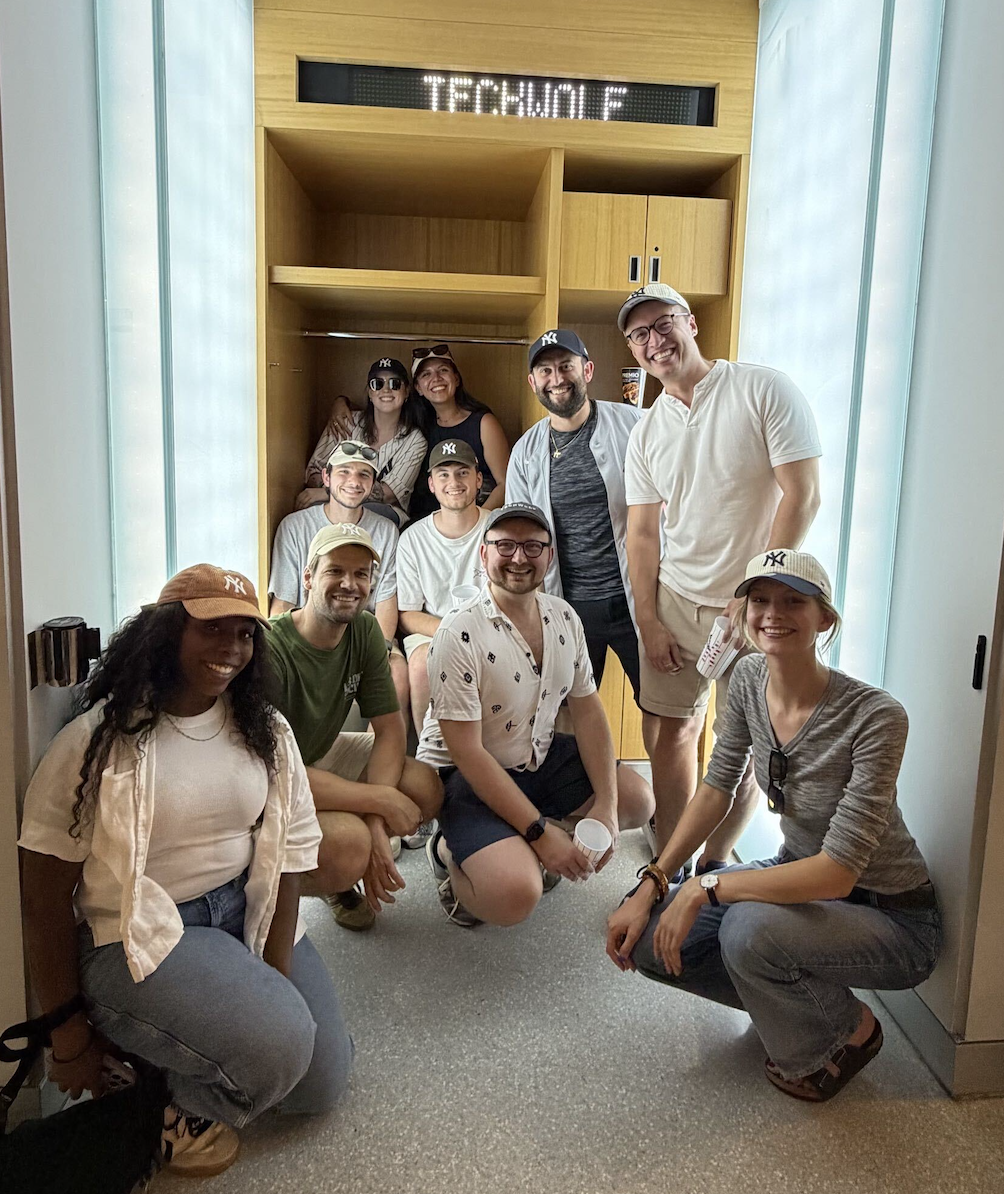
What did your first year in Professional Services in Belgium actually look like?
A lot of learning. TechWolf is a complex product: it's a data layer, not the front end of anything, and getting a proper hold of that took most of the year.
Once I had it, I gave myself a side quest. I went to our London office for a few months to support the presales team on product knowledge, and I came back understanding what presales needs and what it has to offer. It was also my first taste of working outside Belgium.
The other thing you learn quickly is how many teams you touch as a PS person. Engineering above all.
What did you get there that a traditional consulting track wouldn't have given you?
Adaptability. The product changes, the way of working changes, and you're constantly trying things to get more efficient. You have to be comfortable with that pace. In traditional consulting the path is more fixed. Here you're finding out what works and what doesn't, for the team and for the company.
You're also very independent, with room to put your own stamp on a project.
When did New York come up? Did you ask for it, or was it offered?
Both, in a way. I said early on, in my first months, that working abroad was something I really wanted. London was the first taste of that. So when the question about New York came in October 2025, I'd already put my hand up, and it was a very easy yes.
Did it feel like a step forward, a step sideways, or something else? What would you say to someone worried a move like that looks like standing still?
My job didn't change. Same customers, same tasks. On paper, nothing happened.
What changed was that I'm surrounded by my US customers now instead of managing them from six hours away. Being close to people makes the relationship grow in a way calls don't. I'm also next to the go-to-market team, which opened my eyes to how business gets done here. It's very dynamic.
So no, not sideways. My network grew, and so did I.
You're heading to San Francisco as part of the landing team. What does that mean day to day?
It means being one of the first people to make a new TechWolf office real. It'll feel like the start TechWolf had in the beginning, small, with everyone wearing a lot of hats. Presales, helping out with hiring, things that don't have a process yet. I came from a big corporation, so being at the smallest, earliest end of something is exciting.
The part I'm most curious about is how it works with the other offices. The time zones are a real challenge and someone has to build those processes. I'd like to put my stamp on that too.
Lots of excitement, some nerves, a lot of curiosity.
A colleague in PS or Engineering is on the fence about putting their hand up. What do you tell them?
Let's do it. There's so much you can grow into, and all of it gives you experience you can't get any other way. It never hurts to try. If you don't, it just becomes a "what if?"
Every time I've gone abroad it's been good for my career and good for me. So go for it, and see how it works out.
.jpg)
And what would you tell your older self, three years ago?
Say yes to opportunities. I used to be an overthinker, always working out how something could go wrong. Now I take the leap. Less overthinking, more yes.
Internal moves like JD's aren't a perk we advertise. They happen because someone said early and clearly what they wanted, and because we're still small enough to hear it.
JD's route isn't a one-off. The Internal Mobility Track starts you in a real role in Professional Services or Engineering, with a move to another team, another country, or both, planned in from the beginning.
Your journey starts here
Inspired by this story? Discover open opportunities at TechWolf and become part of our growing team.
Blog
From guides to whitepapers, we’ve got everything you need to master job-to-skill profiles.

Mobility series: JD, from Belgium to New York to San Francisco

Building Product at the edge of AI and work: meet Colin Tierney
.jpg)
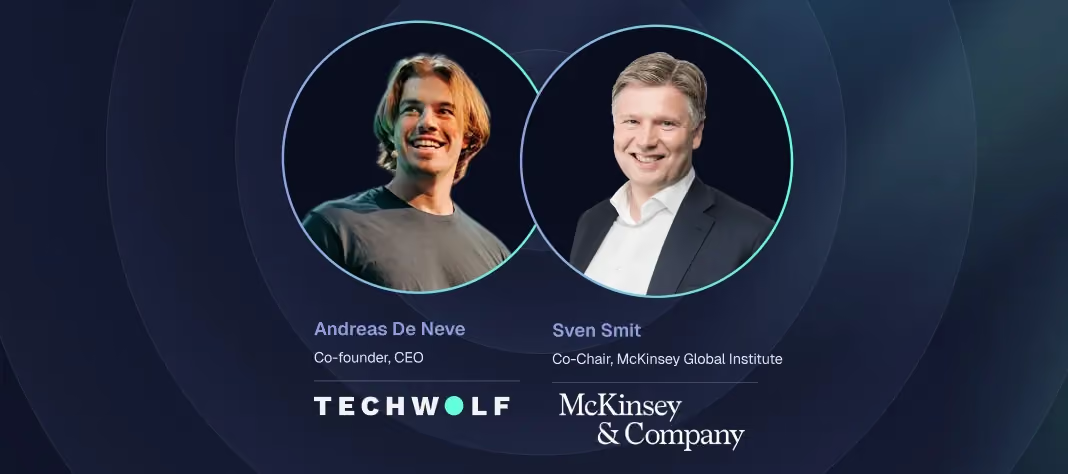
McKinsey x TechWolf on AI, agents, and the next decade of work