
Mobility series: Silas, from junior engineer to engineering manager in five years

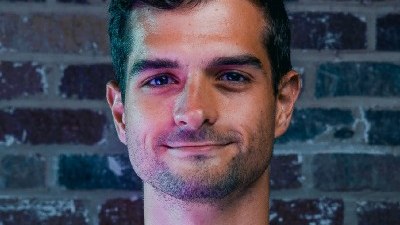
Silas Deblanc is an Engineering Manager at TechWolf. He joined in September 2021 as a junior engineer, became a team lead about a year and a half later, and now runs three teams. In January he leaves for four months in San Francisco as a tech evangelist, back to building hands-on. One company, five years, three titles and a fourth on the way.
This is the second post in our Mobility series. The first, with JD, was about moving between offices and continents. This one is about moving up: what fast growth looks like from the inside, and what it asks of you. We sat down with Silas before he packs for the West Coast.
“In a fast-growing company there are more opportunities than there are people. For me, that is the key to a lot of it.”
Silas Deblanc, Engineering Manager, TechWolf
Take us back to 2021. Why TechWolf, and what was the first thing you shipped?
As a student I took a long time to decide where to work. I didn't know what I wanted to do. I did know I wanted to solve hard problems with talented people and learn a lot. That brought me here. In my first weeks I remember a customer telling us they were struggling to interpret the skills data we provided. One idea the team had was to explore how we could use tools like Power BI or Tableau to give standardized insights out of the box, and get the customer to value faster.
From the customer's request to one of our co-founders presenting it back to them took less than a week. A day or two later he sent me a quote from that customer, who really liked it. It was the first time I felt that kind of impact, and I've been chasing it since.
Many of your friends went into consulting. If you compared notes today, where are you ahead, and where are they?
I seriously considered consulting myself. I wanted a steep learning curve, and I figured you find that either in a startup/scale-up, or at a consultancy. Where I got ahead is speed. I like structure by nature, but here I learned you often don't need it to get to the result. When you work with a lot of motivated people, the pull to move fast is contagious. While peers at big firms were writing a full proposal and taking it through rounds of review, I had usually already shown something to a customer and iterated on it.
Where they were ahead is customer exposure. We work with large enterprises around the world, and when we were smaller, direct access to them wasn't a given. I remember my first on-site customer visits. I felt insecure and unprepared. My consulting friends would probably have walked in far more at ease.
Tell us about your hardest week as an engineer.
How hard a problem feels depends heavily on the confidence you have that you and the team will solve it. To be fair, I rarely felt like we wouldn't make it together, so I don't have a lot of weeks that come to mind.
One week does stand out, though. We were building the first version of Work Intelligence and had promised a first data export to our biggest customer at the time, due Friday evening. Running the algorithm on their whole population took about a day. On Thursday morning we looked at the results and they were really bad. Unfortunately though, the deadline was not negotiable.
We immediately got to action: we cancelled our meetings and booked a room. Some people cancelled their evening plans. Engineers, our CTO and our Head of AI all sat down together. I had one commitment I couldn't move, so I left around seven. When I came back at half past ten, everyone was still there and they had just cracked it. We ran it overnight, and in the morning we had something good enough to build on. A year later it is one of our most successful products.
Nobody in that room asked “what if we don't make it?”. We would sit together until we had figured it out. That is what I remember, more than the stress.
You became a lead about a year and a half in. How did that happen?
I spent most of my first year in a customer-facing team. Then we had a hackathon and prototyped a new platform, Console. Afterwards I told my manager that I believed in it, and that if we ever continued with it, I'd love to be involved. A few months later we formed a team of three around it, with the idea that I would grow into the team lead.
I think they had seen it in me too. In my first year I had picked up hiring on my own initiative, and I tended to drift towards the roadmap and project management side of things.
Luckily, they didn't throw me to the wolves. They built a fail-safe setup instead: an engineering manager watched over the whole operation, so I had room to fail with a safety net underneath. As things went well, he stepped back more and more. Becoming team lead felt like a natural evolution, not a jump.
Then you became the manager. What changed, and how do you stay technical?
It was gradual. Team lead is a player-coach role, half engineer and half lead, so there was no big step change. What did change is what I focused on. As an engineer, you focus on building the most scalable, robust and maintainable application for a given problem. As a manager I ask why we are doing something and where our time has the most effect. Sometimes that meant dragging some technical debt along for a bit longer, because there was a big business opportunity for the team. I still enjoy the craft, of course.
Naturally, as the team grew from six to twelve people, I couldn't carry a full engineering workload any more. However, I make sure to stay close through architecture and design discussions, and by reviewing specs. Tools like Claude help too; I build a lot more in my free time now.
And in January I join our San Francisco team for four months as a tech evangelist. Software engineering has changed a lot in the two years since I last did it full time. I'm looking forward to diving back in and finding out what being a full-time engineer really feels like today.
Someone joins your team next month, straight out of university. What should they do in their first year?
First, pick a growing company. That choice matters more than people think. If TechWolf had stayed at 20 people, I wouldn't be where I am now.
Second, keep your eyes open. In a growing company the opportunities are up for grabs. I got involved in hiring because I saw the need. I built prototypes of product features I believed in and showed them to the right people. That is how you show what you can do, and how you earn trust for a bigger scope than the one you carry today.
Third, reflect and focus on what is most impactful. Look for the opportunities that matter and that other people either don't see or don't get energy from. I put in some late nights and weekends, but only on things I was confident were worth it. When they turned out to be worth it, I wanted to do it again. That loop carried my first year.
“If TechWolf had stayed at 20 people, I wouldn't be where I am now.”
Silas Deblanc, Engineering Manager, TechWolf
And what would you warn them against?
Trying to hack your growth. If I had joined with a plan to grow this fast, it would never have worked. I would have turned down opportunities because they didn't fit the picture in my head. You can't plan a career in a scale-up.
Some of my moves were lateral, and some were not my dream scenario up front. I took them because I saw the opportunity to make more impact in them. They made me more versatile, and that opens up the next opportunity.
I didn't work evenings for a promotion or a raise. That isn't sustainable. I did it because I believed in the work, and because I was having fun.
Silas didn't arrive with a growth plan, and nobody handed him one. He said out loud which project he believed in, and the people around him made room for him to try, with a safety net underneath. If that sounds like the first year you want, have a look at our open roles.
Your journey starts here
Inspired by this story? Discover open opportunities at TechWolf and become part of our growing team.
Blog
From guides to whitepapers, we’ve got everything you need to master job-to-skill profiles.
Mobility series: Silas, from junior engineer to engineering manager in five years

Mobility series: JD, from Belgium to New York to San Francisco

Building Product at the edge of AI and work: meet Colin Tierney
