
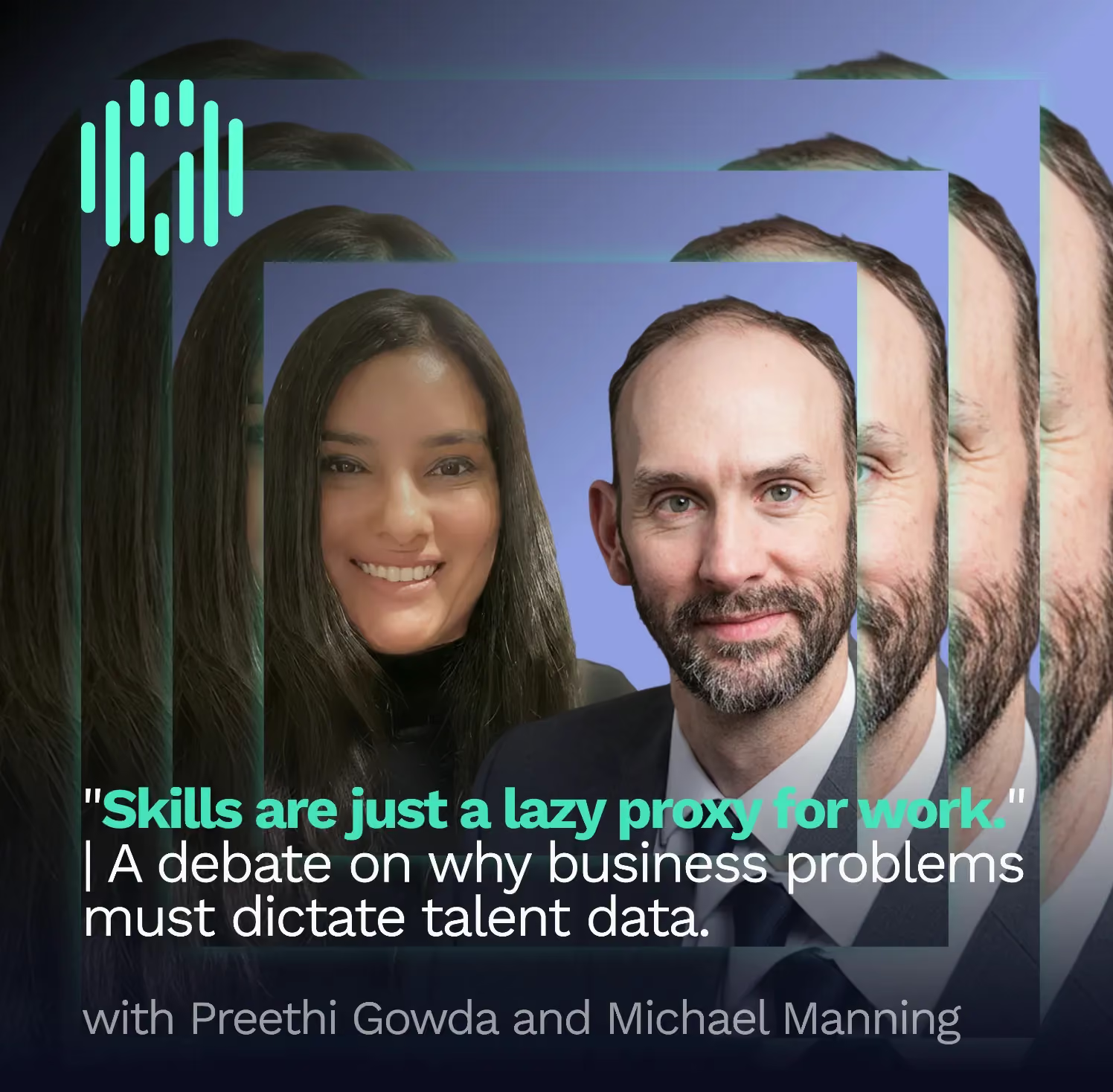
"Skills are just a lazy proxy for work." | A debate with FM’s Mike Manning & Preethi Gowda


Episode Summary
Most people analytics dies in a dashboard. It never reaches the decision board. In this episode, Julius sits down with Preethi Gowda and Michael Manning, the HR data leaders at FM, to drag skills out of the slideware and into the P&L. Mike opens with a line that reframes the whole debate: jobs are a lazy way of doing skills, and skills are a lazy way of doing tasks. Preethi shows what happens when you connect the data to a real problem, including the time a hiring delay saved $3 million in a single quarter. Both of them argue HR should stop speaking HR. The job is to work backward from the decision a business leader has to make, not forward from whatever data you happen to own. If you run a skills or workforce program and you are tired of being politely ignored, start here.
Watch here
Key Takeaways
- Skills sit on people, not on jobs. Jobs carry requirements, people carry skills, and the work itself gets measured at the task level.
- The data is not the starting point. Start with the decision a leader has to make, then work backward to what you actually need to answer it.
- People metrics that live in a dashboard change nothing. The win is getting them onto the decision board, next to revenue and cost.
- Skills only matter when they are tied to a work outcome, plus the knowledge and ability to deliver it. On their own they make HR reactive.
- HR earns the room by speaking the language of the business, not by pushing whatever data it happens to have.
Actionable Insights
- Use a SIPOC chart (supplier, input, process, output, customer) from Six Sigma. Start at the customer decision and work backward through output, process, input and supplier, so the data you assemble answers a real question instead of limiting you to what you already hold.
- Survey your hiring managers on what a "good hire" actually does, then map that to the real tasks of the role. At Siemens this flipped the model: hire for customer-service aptitude, train the technical part. It widened the talent pool and got a workforce ready in 90 days.
- Get finance and business leaders to the same table before approving headcount. Pressure-test whether the gap is capability or workflow. One such review delayed hiring and saved roughly $3 million in a quarter because the real issue was timing, not people.
- Hunt for wasted skills, not just matched ones. If someone has ten skills in a role that needs five, ask which products or services those unused five could serve.
About the Speakers
Preethi Gowda leads Global People Insights and HR Data at FM, where she connects workforce data to business outcomes across hiring, capability planning and capital allocation. She is known for refusing to read people metrics in silos and for pushing data from the dashboard into the actual decision.
Michael Manning is VP of HR Data and Innovation at FM. A Six Sigma practitioner who came up through a rotational program at Siemens, he treats HR as a business discipline measured in revenue, cost and customer value, not activity. His view in one line: "I'm a business professional that does HR."
Related episodes

“Peel back the onion. It’s really not doom and gloom.” | Former CHRO Susan Youngblood on what the data says about AI and jobs
Who owns work redesign, and what has to be true first | Accenture's Matt Morgan on skills technology, ownership, and the questions nobody asks



.webp)