
Episode 31
Jun 17, 2026
 hour 38 min

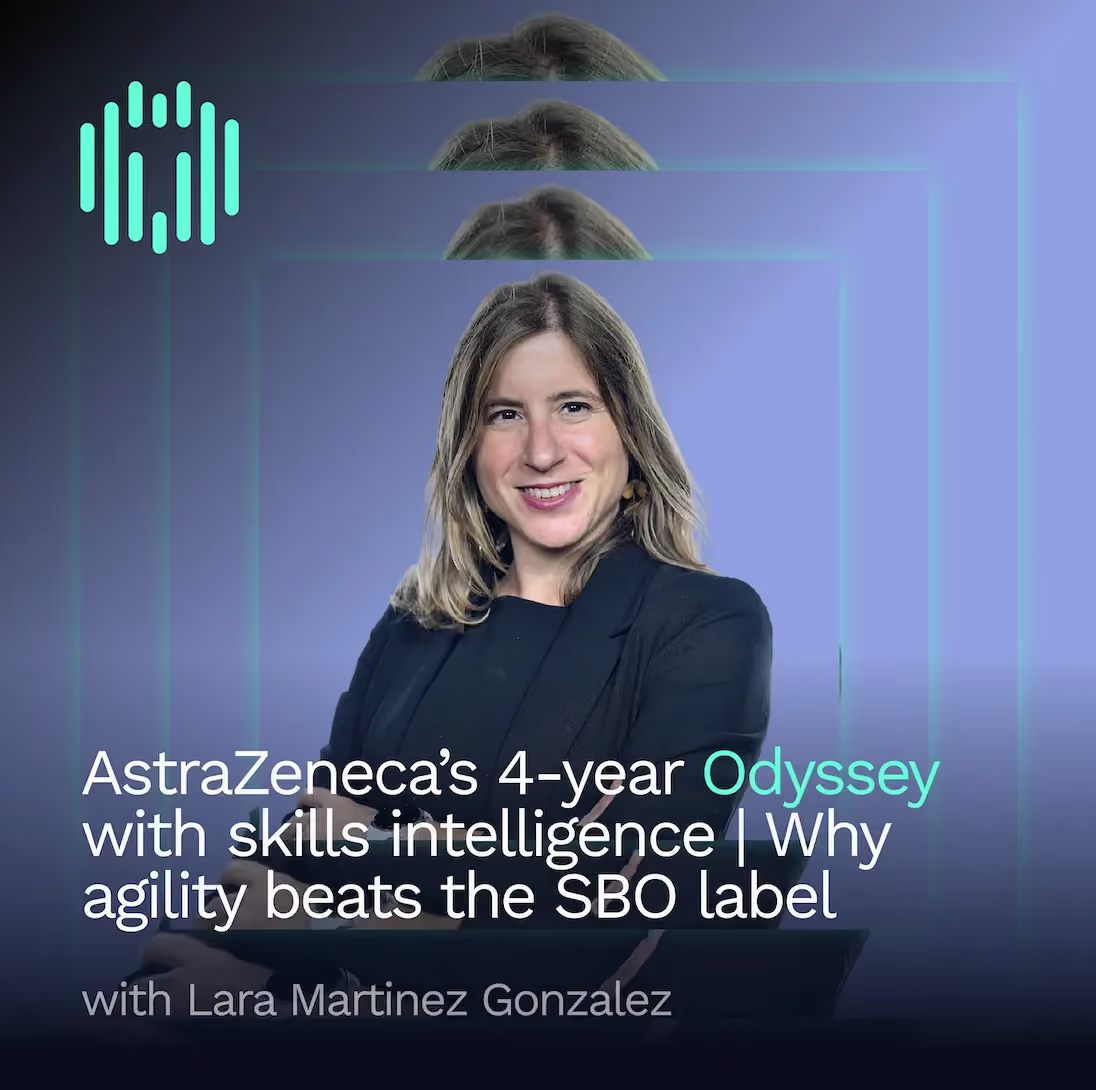
AstraZeneca’s 4-year Odyssey with skills intelligence | Why agility beats the SBO label

Episode Summary

Everybody wants a skills-based organization. Almost nobody has one. AstraZeneca’s Lara Martinez Gonzalez thinks that’s because most leaders aim at the wrong thing. After four years building talent intelligence inside a company with decades of legacy systems, she’s convinced the goal was never “skills-based” at all, it was an agile organization that makes workforce decisions on good data. This conversation traces her journey without the gloss: the fragmented data, the vendor “sirens” pulling in every direction, the year she lost being too in love with the skills narrative, and the slow work of building one common language she calls a Rosetta stone. She’s candid that the ROI is still arriving: faster hiring, more internal mobility, fewer redundant systems, and clear-eyed about why a fully skills-based org stays out of reach. If you own this remit, it’s the realest account you’ll hear.

Watch here

Key Takeaways

  • “Skills-based organization” is a means, not an end. The real goal is an agile org that decides with workforce data.
  • Pick one business problem and stay on it. Chasing every use case dilutes the narrative until the trip becomes eternal.
  • Drop the word “skills” with business leaders. Talk about better data and what it does for their priorities.
  • Use the quiet periods for no-regret moves: proficiency-level groundwork and stakeholder education that pay off when the next wave hits.
  • A fully skills-based org is blocked less by technology than by compensation models and labor regulation. Expect a hybrid, not a revolution.

Actionable Insights

  1. Open every business conversation with “what’s your priority right now?”, then map skills data to that, not the other way around.
  2. Build a skills “Rosetta stone” that’s agnostic to any vendor, so you can move it between systems as your stack changes.
  3. Stand up lightweight governance: name who owns skills across learning, talent acquisition, total rewards and the business before the taxonomy sprawls.
  4. In low-tide periods, plant seeds, reconcile proficiency levels and educate stakeholders so adoption accelerates when urgency arrives.

About the Speaker

Lara Martinez Gonzalez is Global Director of Talent Intelligence at AstraZeneca, where she leads the company’s skills and workforce-data strategy. Over the past four years she has built AstraZeneca’s talent intelligence platform plus the governance, taxonomy and frameworks around it, connecting skills data across talent acquisition, internal mobility and workforce planning. She is a recognized voice in the talent intelligence community on turning skills from an HR concept into business-grade data.

Related episodes

Episode 31
Jun 17, 2026
 hour 38 min

AstraZeneca’s 4-year Odyssey with skills intelligence | Why agility beats the SBO label

AstraZeneca’s 4-year Odyssey with skills intelligence | Why agility beats the SBO label
Episode 30
May 25, 2026
 hour 39 min

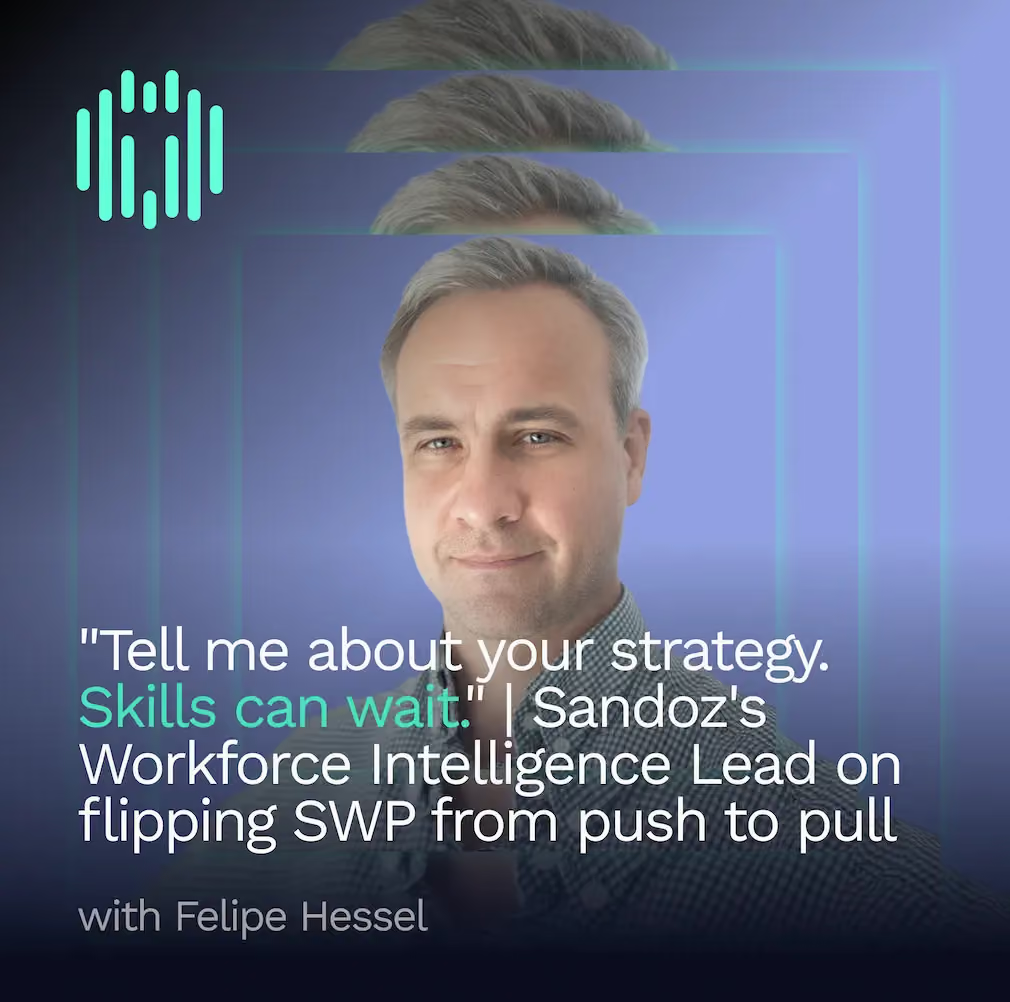
"Tell me about your strategy. Skills can wait." | Sandoz's Workforce Intelligence Lead on the one move that flips SWP from push to pull

"Tell me about your strategy. Skills can wait." | Sandoz's Workforce Intelligence Lead on the one move that flips SWP from push to pull
Episode 29
Apr 29, 2026
 hour 12 min

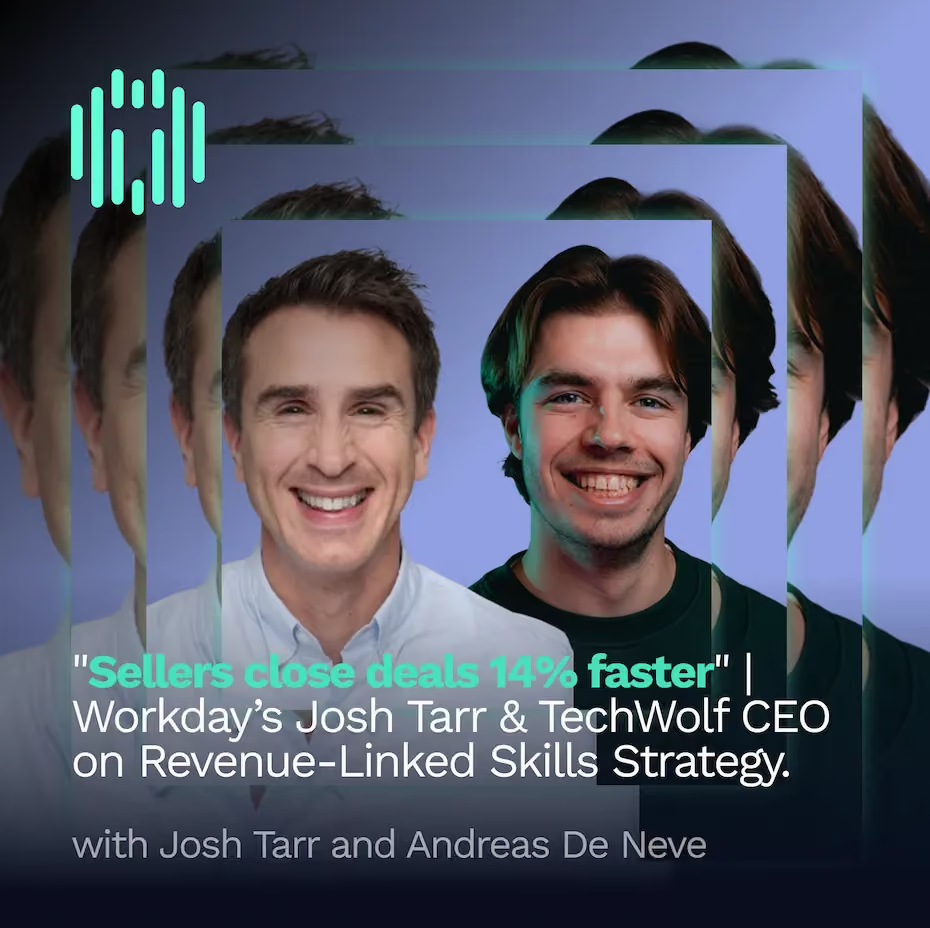
"Sellers close deals 14% faster." | Special Episode: Workday’s Josh Tarr & TechWolf CEO Andreas De Neve on Revenue-Linked Skills Strategy.

"Sellers close deals 14% faster." | Special Episode: Workday’s Josh Tarr & TechWolf CEO Andreas De Neve on Revenue-Linked Skills Strategy.
Episode 31
Jun 17, 2026
 hour 38 min
listen now
Subscribe to our newsletter

Subscribe now to receive new episodes straight to your mailbox.

AstraZeneca’s 4-year Odyssey with skills intelligence | Why agility beats the SBO label

Episode Summary

Everybody wants a skills-based organization. Almost nobody has one. AstraZeneca’s Lara Martinez Gonzalez thinks that’s because most leaders aim at the wrong thing. After four years building talent intelligence inside a company with decades of legacy systems, she’s convinced the goal was never “skills-based” at all, it was an agile organization that makes workforce decisions on good data. This conversation traces her journey without the gloss: the fragmented data, the vendor “sirens” pulling in every direction, the year she lost being too in love with the skills narrative, and the slow work of building one common language she calls a Rosetta stone. She’s candid that the ROI is still arriving: faster hiring, more internal mobility, fewer redundant systems, and clear-eyed about why a fully skills-based org stays out of reach. If you own this remit, it’s the realest account you’ll hear.

Watch here

Key Takeaways

  • “Skills-based organization” is a means, not an end. The real goal is an agile org that decides with workforce data.
  • Pick one business problem and stay on it. Chasing every use case dilutes the narrative until the trip becomes eternal.
  • Drop the word “skills” with business leaders. Talk about better data and what it does for their priorities.
  • Use the quiet periods for no-regret moves: proficiency-level groundwork and stakeholder education that pay off when the next wave hits.
  • A fully skills-based org is blocked less by technology than by compensation models and labor regulation. Expect a hybrid, not a revolution.

Actionable Insights

  1. Open every business conversation with “what’s your priority right now?”, then map skills data to that, not the other way around.
  2. Build a skills “Rosetta stone” that’s agnostic to any vendor, so you can move it between systems as your stack changes.
  3. Stand up lightweight governance: name who owns skills across learning, talent acquisition, total rewards and the business before the taxonomy sprawls.
  4. In low-tide periods, plant seeds, reconcile proficiency levels and educate stakeholders so adoption accelerates when urgency arrives.

About the Speaker

Lara Martinez Gonzalez is Global Director of Talent Intelligence at AstraZeneca, where she leads the company’s skills and workforce-data strategy. Over the past four years she has built AstraZeneca’s talent intelligence platform plus the governance, taxonomy and frameworks around it, connecting skills data across talent acquisition, internal mobility and workforce planning. She is a recognized voice in the talent intelligence community on turning skills from an HR concept into business-grade data.

No items found.