
Episode 30
May 25, 2026
 hour 39 min

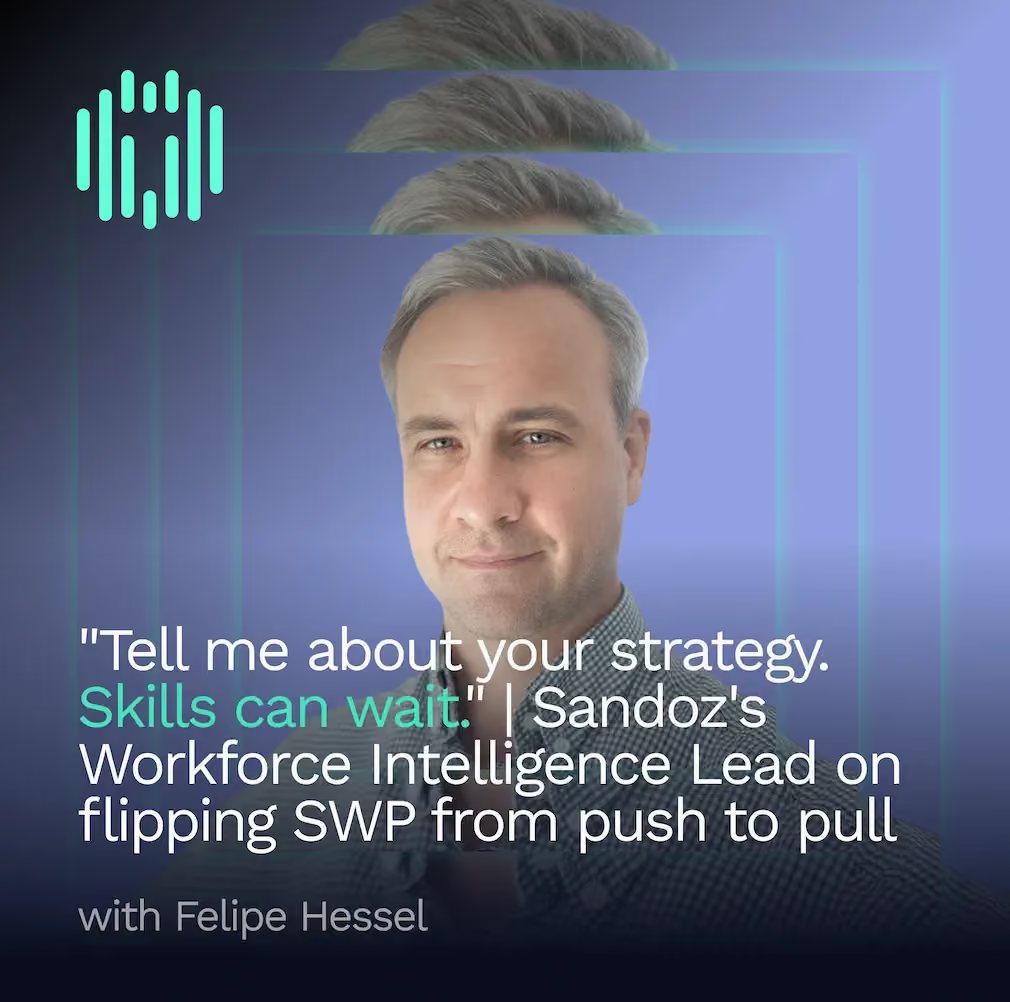
"Tell me about your strategy. Skills can wait." | Sandoz's Workforce Intelligence Lead on the one move that flips SWP from push to pull

Episode Summary

Everyone repeats the three-legged stool of transformation: people, technology, process. Felipe Hessel, who leads Workforce Intelligence at Sandoz, says there's a fourth leg most people forget, and it's the one that decides whether any of this works: the user. In this episode he walks Julius through how he built a workforce intelligence function from scratch, the six-step strategic workforce planning framework he runs, and why he treats HR as a product rather than a service. He is blunt about the hype too. To him, AI automation in HR is still mostly a promise, held back by ethics, risk and the EU AI Act, so he focuses on what actually saves time today. One example: building his own agents cut roughly 60% of the time his planning process used to eat. If you are standing up workforce intelligence or defending the investment, this is a practical playbook.

Embed

Key Takeaways

  • The transformation stool has a fourth leg. People, technology and process are not enough; the user decides whether anything actually gets adopted.
  • HR's unique contribution to AI transformation is adoption and change management, reaching people's minds and their hearts, not owning every piece of data.
  • Workforce intelligence rests on four parts: people analytics, strategic workforce planning on the three-to-five-year horizon, skills, and AI applied to the function itself.
  • Run HR as a product, not a service. Be clear on the user, the value, and what you are willing to kill once it has outlived its purpose.
  • Be skeptical of scale for its own sake. If someone has prioritized 7,000 "critical" skills, ask how anyone manages that, even with good technology.

Actionable Insights

  • Use Felipe's six-step strategic workforce planning framework: contract the engagement, understand the strategy and service portfolio, map demand (critical roles down to the top tasks and the skills behind them), assess external supply, decide talent actions (build, buy, borrow or automate), then hand it back with trigger-based metrics to track.
  • Open stakeholder meetings on their strategy, not your jargon. Ask what they must achieve in three to five years and which capabilities they have to win on; the conversation about roles, tasks and skills earns its way in after that.
  • Apply AI to your own function first. Felipe built agents for parts of his planning process and reports cutting roughly 60% of the time it used to take.
  • When you build a new function, run a 90-day plan: meet senior stakeholders early, listen for their objections, challenges and priorities, then pick the one or two use cases where you can show business impact fast.

About the Speaker

Felipe Hessel leads Workforce Intelligence at Sandoz, a function he built from the ground up. He works at the intersection of people analytics, strategic workforce planning, skills and applied AI, and is a vocal advocate for running HR as a product.

Related episodes

Episode 30
May 25, 2026
 hour 39 min

"Tell me about your strategy. Skills can wait." | Sandoz's Workforce Intelligence Lead on the one move that flips SWP from push to pull

"Tell me about your strategy. Skills can wait." | Sandoz's Workforce Intelligence Lead on the one move that flips SWP from push to pull
Episode 29
Apr 29, 2026
 hour 12 min

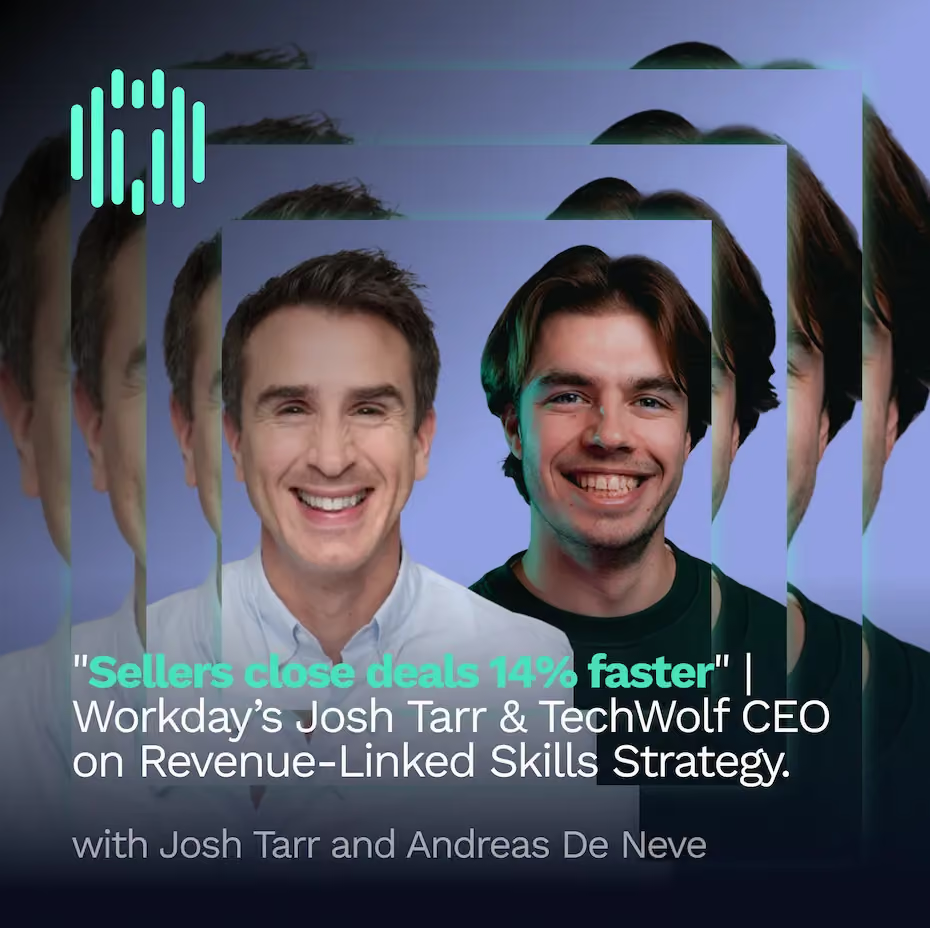
"Sellers close deals 14% faster." | Special Episode: Workday’s Josh Tarr & TechWolf CEO Andreas De Neve on Revenue-Linked Skills Strategy.

"Sellers close deals 14% faster." | Special Episode: Workday’s Josh Tarr & TechWolf CEO Andreas De Neve on Revenue-Linked Skills Strategy.
Episode 27
Mar 23, 2026
 hour 35 min

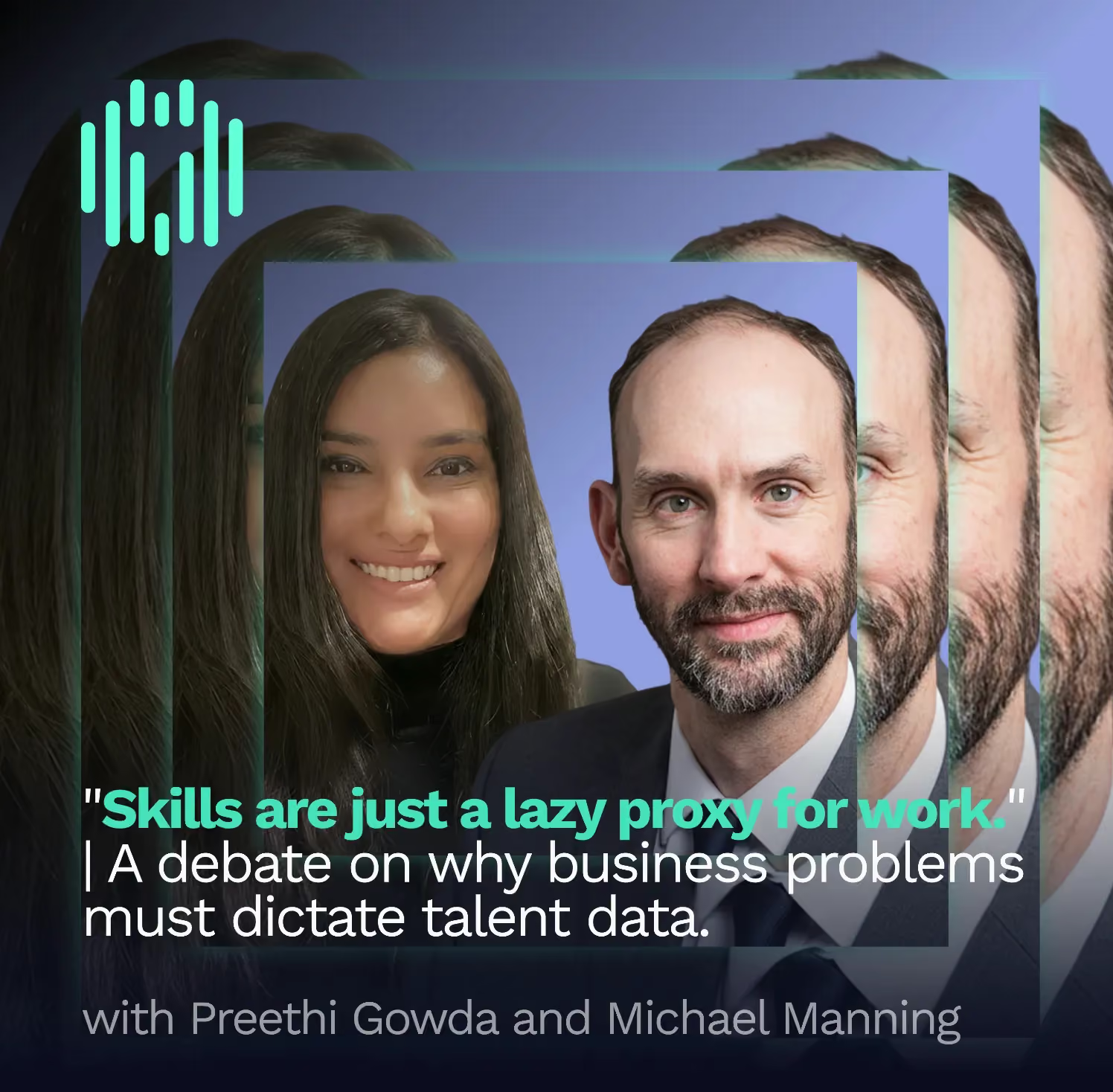
"Skills are just a lazy proxy for work." | A debate with FM’s Mike Manning & Preethi Gowda

"Skills are just a lazy proxy for work." | A debate with FM’s Mike Manning & Preethi Gowda
Episode 30
May 25, 2026
 hour 39 min
listen now
Subscribe to our newsletter

Subscribe now to receive new episodes straight to your mailbox.

"Tell me about your strategy. Skills can wait." | Sandoz's Workforce Intelligence Lead on the one move that flips SWP from push to pull

Episode Summary

Everyone repeats the three-legged stool of transformation: people, technology, process. Felipe Hessel, who leads Workforce Intelligence at Sandoz, says there's a fourth leg most people forget, and it's the one that decides whether any of this works: the user. In this episode he walks Julius through how he built a workforce intelligence function from scratch, the six-step strategic workforce planning framework he runs, and why he treats HR as a product rather than a service. He is blunt about the hype too. To him, AI automation in HR is still mostly a promise, held back by ethics, risk and the EU AI Act, so he focuses on what actually saves time today. One example: building his own agents cut roughly 60% of the time his planning process used to eat. If you are standing up workforce intelligence or defending the investment, this is a practical playbook.

Embed

Key Takeaways

  • The transformation stool has a fourth leg. People, technology and process are not enough; the user decides whether anything actually gets adopted.
  • HR's unique contribution to AI transformation is adoption and change management, reaching people's minds and their hearts, not owning every piece of data.
  • Workforce intelligence rests on four parts: people analytics, strategic workforce planning on the three-to-five-year horizon, skills, and AI applied to the function itself.
  • Run HR as a product, not a service. Be clear on the user, the value, and what you are willing to kill once it has outlived its purpose.
  • Be skeptical of scale for its own sake. If someone has prioritized 7,000 "critical" skills, ask how anyone manages that, even with good technology.

Actionable Insights

  • Use Felipe's six-step strategic workforce planning framework: contract the engagement, understand the strategy and service portfolio, map demand (critical roles down to the top tasks and the skills behind them), assess external supply, decide talent actions (build, buy, borrow or automate), then hand it back with trigger-based metrics to track.
  • Open stakeholder meetings on their strategy, not your jargon. Ask what they must achieve in three to five years and which capabilities they have to win on; the conversation about roles, tasks and skills earns its way in after that.
  • Apply AI to your own function first. Felipe built agents for parts of his planning process and reports cutting roughly 60% of the time it used to take.
  • When you build a new function, run a 90-day plan: meet senior stakeholders early, listen for their objections, challenges and priorities, then pick the one or two use cases where you can show business impact fast.

About the Speaker

Felipe Hessel leads Workforce Intelligence at Sandoz, a function he built from the ground up. He works at the intersection of people analytics, strategic workforce planning, skills and applied AI, and is a vocal advocate for running HR as a product.

No items found.