
Dark teal gradient
Episode 36
Sep 24, 2026
 hour 42 min

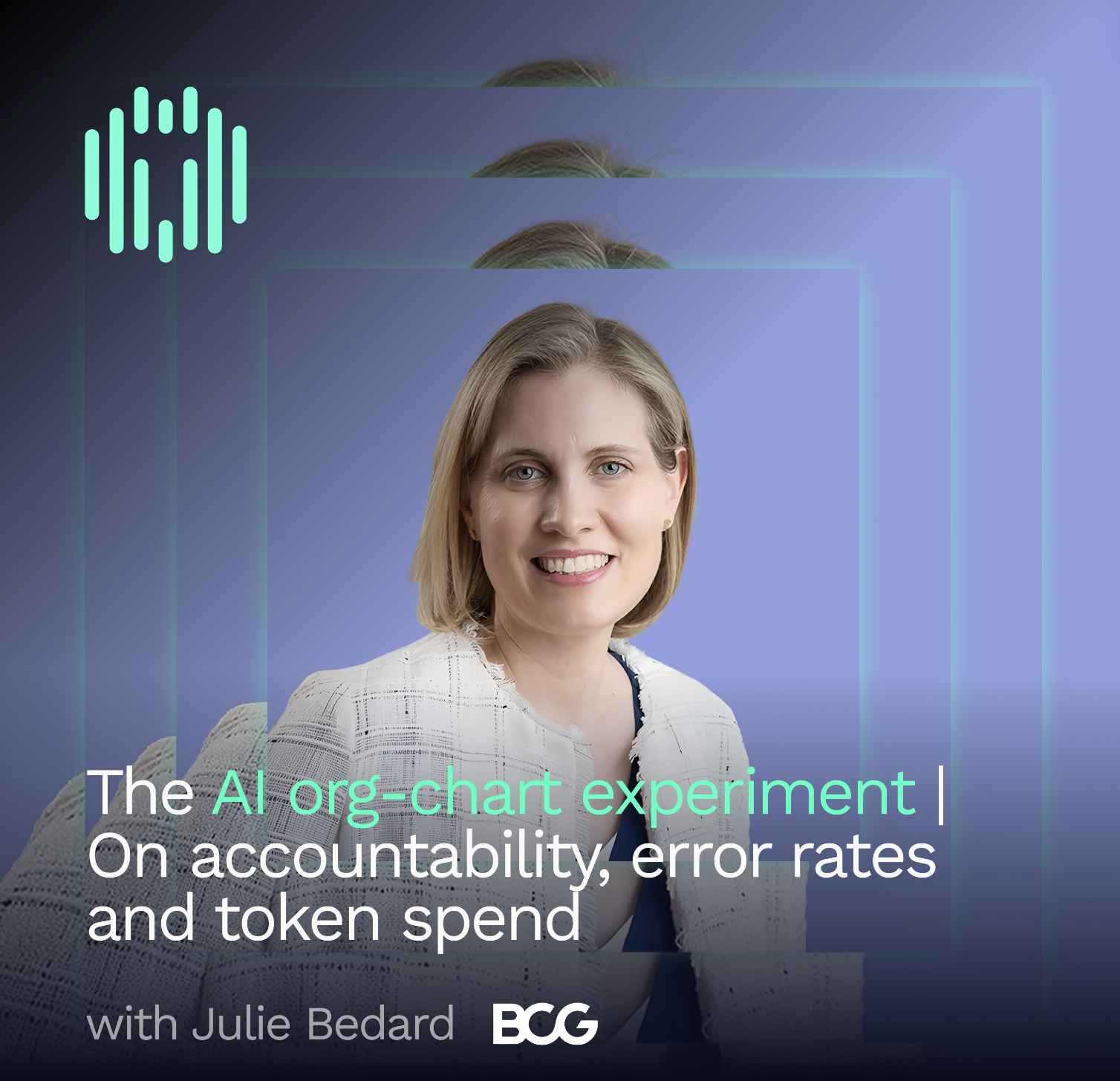
The AI org-chart experiment | BCG's Julie Bedard on accountability, error rates and token spend

Episode summary

Roughly a third of companies now talk about AI as a teammate or an employee, and some have already put agents on the org chart. The logic is familiarity: make AI feel like a colleague and people will use it. Julie Bedard, Managing Director and Partner at BCG, set out to test that.

With BCG's Matt Kropp and Boston University researcher Emma Wiles, she gave around 1,300 HR and finance managers the same document to review and changed only who they were told had created it: a human employee, an AI employee or an AI tool. The familiarity argument didn't hold. Calling AI an employee made no significant difference to intent to adopt, and among managers already used to the "AI teammate" idea, it lowered personal accountability, let more errors through and pushed more work up to someone else. Recorded at BCG's Boston office, the conversation moves from the research, published in Harvard Business Review, to what it means for agent governance, workflow redesign, token spend and the first 90 days of a CHRO or chief AI officer.

Listen here

In this episode

  • 03:08; BCG's 10/20/70, and the 70% nobody budgets for
  • 05:44; The experiment: one document, three different "authors"
  • 08:59; The finding that killed the familiarity argument
  • 11:27; "Our governance systems haven't caught up with agents"
  • 17:25; Reviewers caught fewer errors and escalated more
  • 23:34; Test track versus New York City at rush hour
  • 27:56; Token-based competition, and why usage is the wrong thing to reward
  • 36:04; The first 90 days for a CHRO or a chief AI officer

Key takeaways

  • Humanizing AI doesn't buy adoption. Framing AI as an employee or teammate made no significant difference to people's intent to use it.
  • The cost lands on the people who already know the framing. Managers used to "AI as teammate" felt less personally accountable, caught fewer errors and asked for more second reviews.
  • AI can't be accountable. "AI made the mistake" is not an answer in an organization making thousands of decisions a day; a named person has to own the output.
  • Governance hasn't caught up with agents. Few companies have settled who owns an agent's output, who checks it, and when it gets decommissioned.
  • Polished isn't the same as right. Work that looks sound invites a lighter review, and people misjudge where AI's jagged edge of performance sits.
  • Reward productive token use, not usage. Tokens are the application of intelligence, not just a cost line for IT to manage.

Actionable insights

  1. Set a very high bar for humanizing AI. If you do it, be clear on the benefit and put accountability safeguards in place first.
  2. Make accountability explicit and personal. Name who owns, reviews and monitors each agent's output, and hold AI work to the same review bar as human work.
  3. Start from business strategy, not use cases. Define the outcome without AI in the picture, then ask how AI accelerates it. Design for rush hour, not the test track.
  4. Do fewer things, better. Pick a small set of priority areas, work cross-functionally and closer to a blank sheet there, and update job descriptions, handoffs and team ratios.
  5. Say what's changing. Name the shifts in roles, skills and expectations even without every answer; when leaders stay quiet, employees draw their own conclusions.
  6. Unpack "ways of working" into tasks, talent and teams when business leaders bring you talent questions.

About the guest

Julie Bedard is a Managing Director and Partner at Boston Consulting Group (BCG) in Boston. Her work sits at the intersection of people and AI, with a focus on the human side of integrating AI into work. Together with Matt Kropp, she researches how AI reshapes jobs, the labor market and talent practices, and she co-authored the Harvard Business Review article "Research: Why You Shouldn't Treat AI Agents Like Employees."

Dark teal gradient

Related episodes

Episode 35
Aug 27, 2026
 hour 36 min

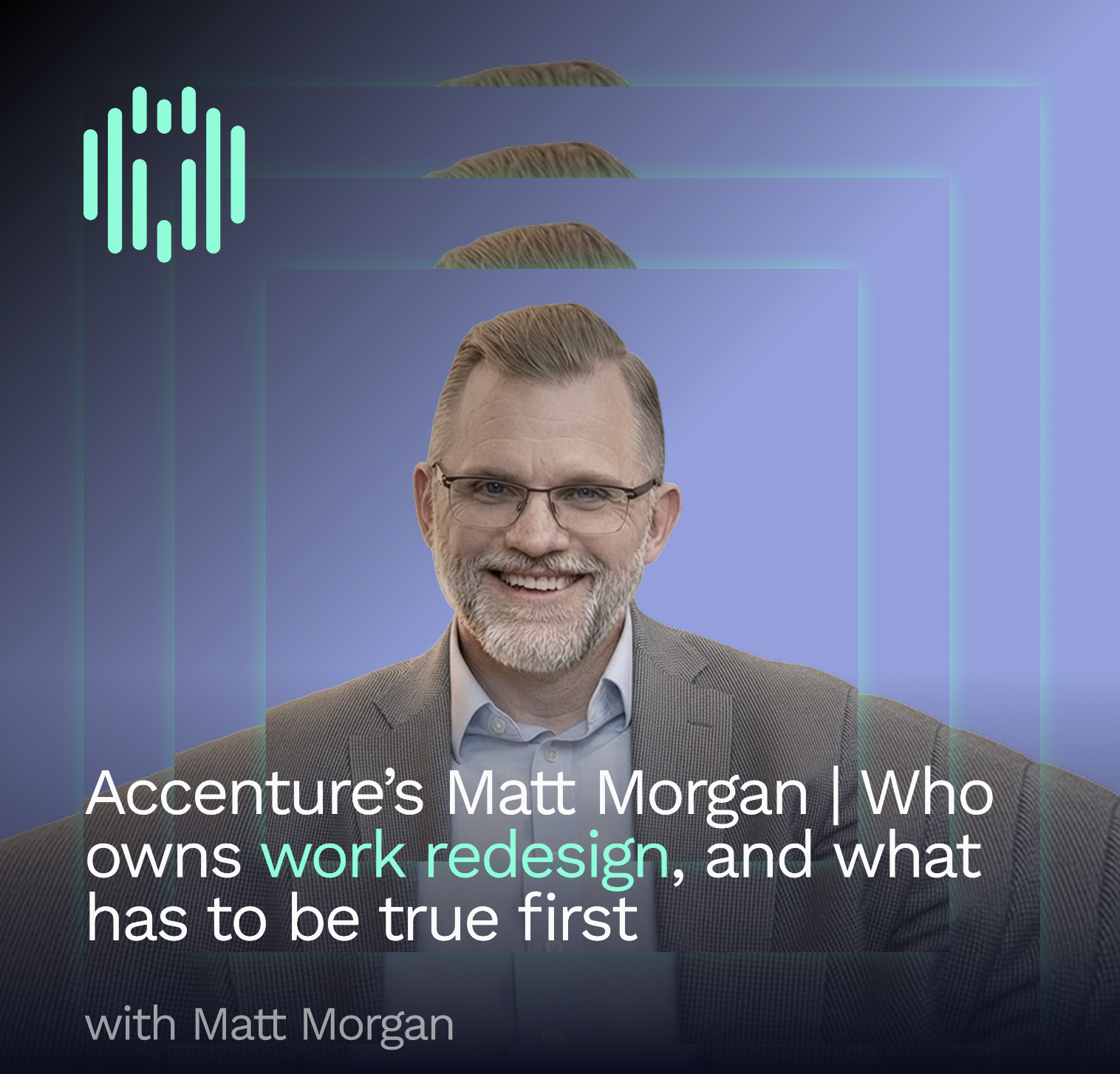
Who owns work redesign, and what has to be true first | Accenture's Matt Morgan on skills technology, ownership, and the questions nobody asks

Who owns work redesign, and what has to be true first | Accenture's Matt Morgan on skills technology, ownership, and the questions nobody asks
Episode 36
Sep 24, 2026
 hour 42 min

The AI org-chart experiment | BCG's Julie Bedard on accountability, error rates and token spend

The AI org-chart experiment | BCG's Julie Bedard on accountability, error rates and token spend
Episode 34
Aug 3, 2026
 hour 42 min

“It's not a super sexy problem, but it's the foundation of everything.” | Ian Bailie, Synopsys' VP of People Strategy, on a best-of-breed skills stack

“It's not a super sexy problem, but it's the foundation of everything.” | Ian Bailie, Synopsys' VP of People Strategy, on a best-of-breed skills stack
Episode 36
Sep 24, 2026
 hour 42 min
listen now
Subscribe to our newsletter

Subscribe now to receive new episodes straight to your mailbox.

The AI org-chart experiment | BCG's Julie Bedard on accountability, error rates and token spend
Episode summary

Roughly a third of companies now talk about AI as a teammate or an employee, and some have already put agents on the org chart. The logic is familiarity: make AI feel like a colleague and people will use it. Julie Bedard, Managing Director and Partner at BCG, set out to test that.

With BCG's Matt Kropp and Boston University researcher Emma Wiles, she gave around 1,300 HR and finance managers the same document to review and changed only who they were told had created it: a human employee, an AI employee or an AI tool. The familiarity argument didn't hold. Calling AI an employee made no significant difference to intent to adopt, and among managers already used to the "AI teammate" idea, it lowered personal accountability, let more errors through and pushed more work up to someone else. Recorded at BCG's Boston office, the conversation moves from the research, published in Harvard Business Review, to what it means for agent governance, workflow redesign, token spend and the first 90 days of a CHRO or chief AI officer.

Listen here

In this episode

  • 03:08; BCG's 10/20/70, and the 70% nobody budgets for
  • 05:44; The experiment: one document, three different "authors"
  • 08:59; The finding that killed the familiarity argument
  • 11:27; "Our governance systems haven't caught up with agents"
  • 17:25; Reviewers caught fewer errors and escalated more
  • 23:34; Test track versus New York City at rush hour
  • 27:56; Token-based competition, and why usage is the wrong thing to reward
  • 36:04; The first 90 days for a CHRO or a chief AI officer

Key takeaways

  • Humanizing AI doesn't buy adoption. Framing AI as an employee or teammate made no significant difference to people's intent to use it.
  • The cost lands on the people who already know the framing. Managers used to "AI as teammate" felt less personally accountable, caught fewer errors and asked for more second reviews.
  • AI can't be accountable. "AI made the mistake" is not an answer in an organization making thousands of decisions a day; a named person has to own the output.
  • Governance hasn't caught up with agents. Few companies have settled who owns an agent's output, who checks it, and when it gets decommissioned.
  • Polished isn't the same as right. Work that looks sound invites a lighter review, and people misjudge where AI's jagged edge of performance sits.
  • Reward productive token use, not usage. Tokens are the application of intelligence, not just a cost line for IT to manage.

Actionable insights

  1. Set a very high bar for humanizing AI. If you do it, be clear on the benefit and put accountability safeguards in place first.
  2. Make accountability explicit and personal. Name who owns, reviews and monitors each agent's output, and hold AI work to the same review bar as human work.
  3. Start from business strategy, not use cases. Define the outcome without AI in the picture, then ask how AI accelerates it. Design for rush hour, not the test track.
  4. Do fewer things, better. Pick a small set of priority areas, work cross-functionally and closer to a blank sheet there, and update job descriptions, handoffs and team ratios.
  5. Say what's changing. Name the shifts in roles, skills and expectations even without every answer; when leaders stay quiet, employees draw their own conclusions.
  6. Unpack "ways of working" into tasks, talent and teams when business leaders bring you talent questions.

About the guest

Julie Bedard is a Managing Director and Partner at Boston Consulting Group (BCG) in Boston. Her work sits at the intersection of people and AI, with a focus on the human side of integrating AI into work. Together with Matt Kropp, she researches how AI reshapes jobs, the labor market and talent practices, and she co-authored the Harvard Business Review article "Research: Why You Shouldn't Treat AI Agents Like Employees."

No items found.