
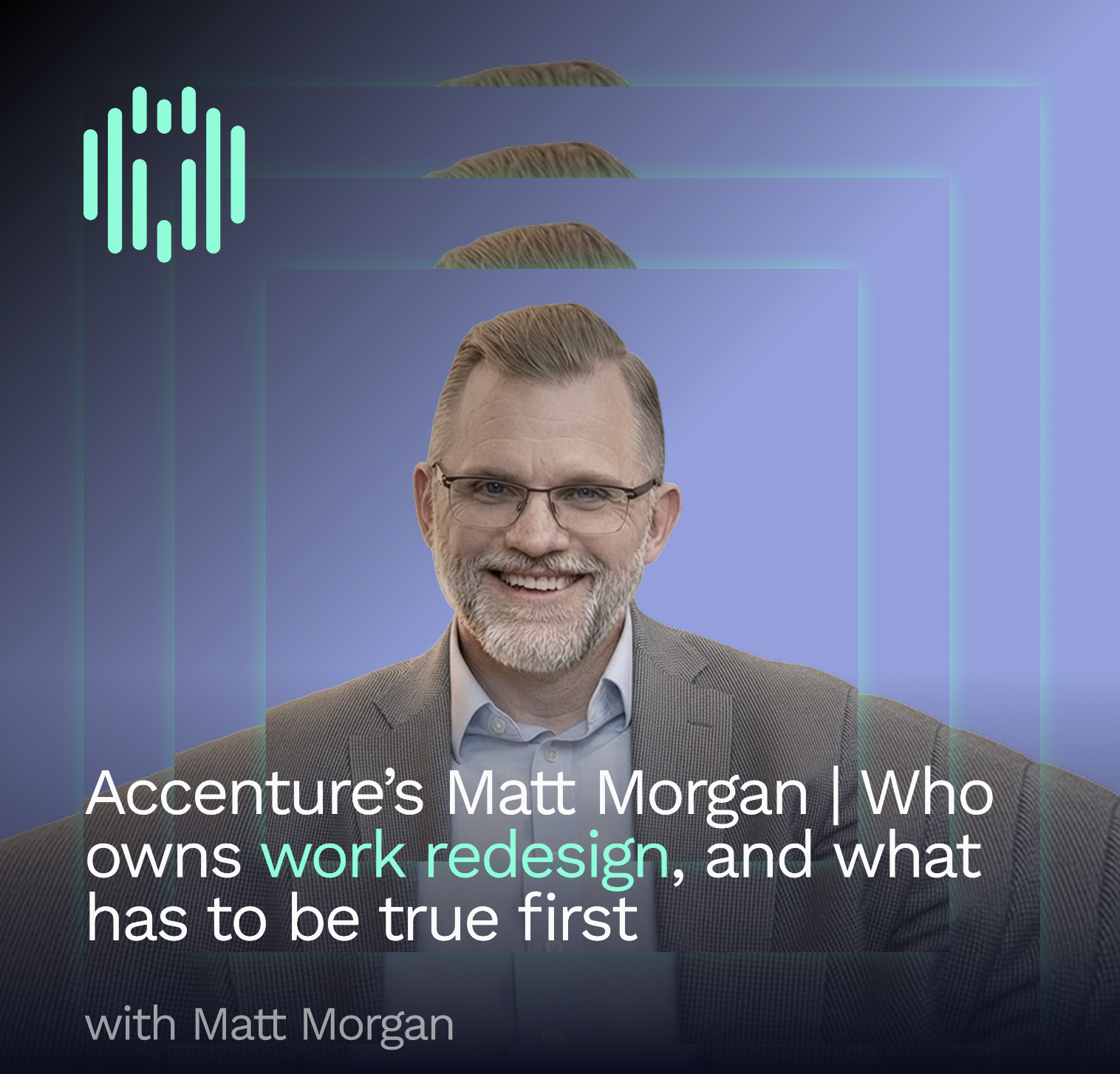
Who owns work redesign, and what has to be true first | Accenture's Matt Morgan on skills technology, ownership, and the questions nobody asks


Episode summary
Matthew Morgan did not come up as a consultant. He ran parts of Disney's parks and resorts business on the US East Coast, got recruited into HR for his operations knowledge, and has spent twenty-five years since then in job architecture and skills data, first at IBM and now as Managing Director for Talent Reinvention at Accenture. That practitioner history shows in his advice, which is almost aggressively practical: stop opening business conversations with skills and open them with tasks, because tasks are the language of work getting done and skills carry a learning curve your business colleagues did not ask for. Recorded in New York, the conversation moves from what reinvention actually means in the agentic era to the line between job architecture, which exists to pay human beings, and work architecture, which can cover agents too. Along the way he names the four owners who all have to be in the room before work redesign survives contact with reality, and the three questions he asks any client before they spend a dollar on technology.
Listen here
In this episode
- 01:59; HR's moment to lead, and why it is still playing catch-up
- 04:05; What talent reinvention means, and how it differs from transformation
- 08:05; Why tasks, not skills, are the language your business already speaks
- 09:43; What has to be true before a skills technology works at your company
- 12:23; Where to draw the line between redesigning work and just automating tasks
- 15:14; The four-legged stool: who actually owns work redesign
- 17:41; Agents in the org chart: what Matt has and has not seen in practice
- 20:41; Cloudflare's 20% layoff and the sellers, builders, measurers split
- 30:58; The three questions to answer before you buy any AI tool
Key takeaways
- Lead with tasks, not skills. Tasks are how the business already describes its own work, so the learning curve disappears and the translation into jobs and skills happens back inside HR.
- Job architecture and work architecture are two different data sets. One exists to pay human beings, the other covers how work gets delivered, agents included. Keep them related, not merged.
- Nobody owns work redesign alone. Business, IT, talent and total rewards each hold a leg of the stool, and skipping total rewards means you cannot survey the new jobs or move the pay bands afterwards.
- The agent manager already exists. Matt sees people on real org charts responsible for a team of agents and no direct reports, but no sign yet of an agent in charge of anything.
- Headcount survived. FTEs remain the planning unit because work output units are close to unmeasurable in most businesses, and the real change shows up in spans, layers and control points.
- Pilots without a strategy turn into whack-a-mole. Taking a comprehensive picture first and prioritising beats trying things and hoping value appears.
Actionable insights
- Map the process end to end before you pick a target. Work L1 to L3 across functions rather than inside one, then snap the line where value concentrates and leave the rest alone for now.
- Bring tasks to the business and take the job and skill implications back to HR. Stop asking business colleagues to learn your taxonomy before the conversation can start.
- Convene all four owners before you touch the operating model. Business, IT, talent and total rewards, with the right forum for each at the right point rather than everyone in every meeting.
- Separate your data sets deliberately. Keep job architecture for paying humans, build work architecture for how the work is delivered, and relate them through your master data structures.
- Answer three questions before you evaluate any vendor. What are you solving for; are you prepared for this change across people, process and technology; and how does this investment move an outcome the business already owns, faster or better. No answers, no purchase decision.
About the guest
Matthew Morgan is Managing Director for Talent Reinvention at Accenture, where he advises organizations on job architecture, skills data, and how work itself is being reshaped by agentic systems. He came to consulting from the practitioner side, running operations in Disney's parks and resorts business before being recruited internally into HR, where he deployed frontline workforce and time-recording technology, in his words "skills before skills were a thing." He spent the following decade in IBM's services arm before joining Accenture five years ago. Twenty-five years of his career have been rooted in workforce data.
Related episodes
Who owns work redesign, and what has to be true first | Accenture's Matt Morgan on skills technology, ownership, and the questions nobody asks
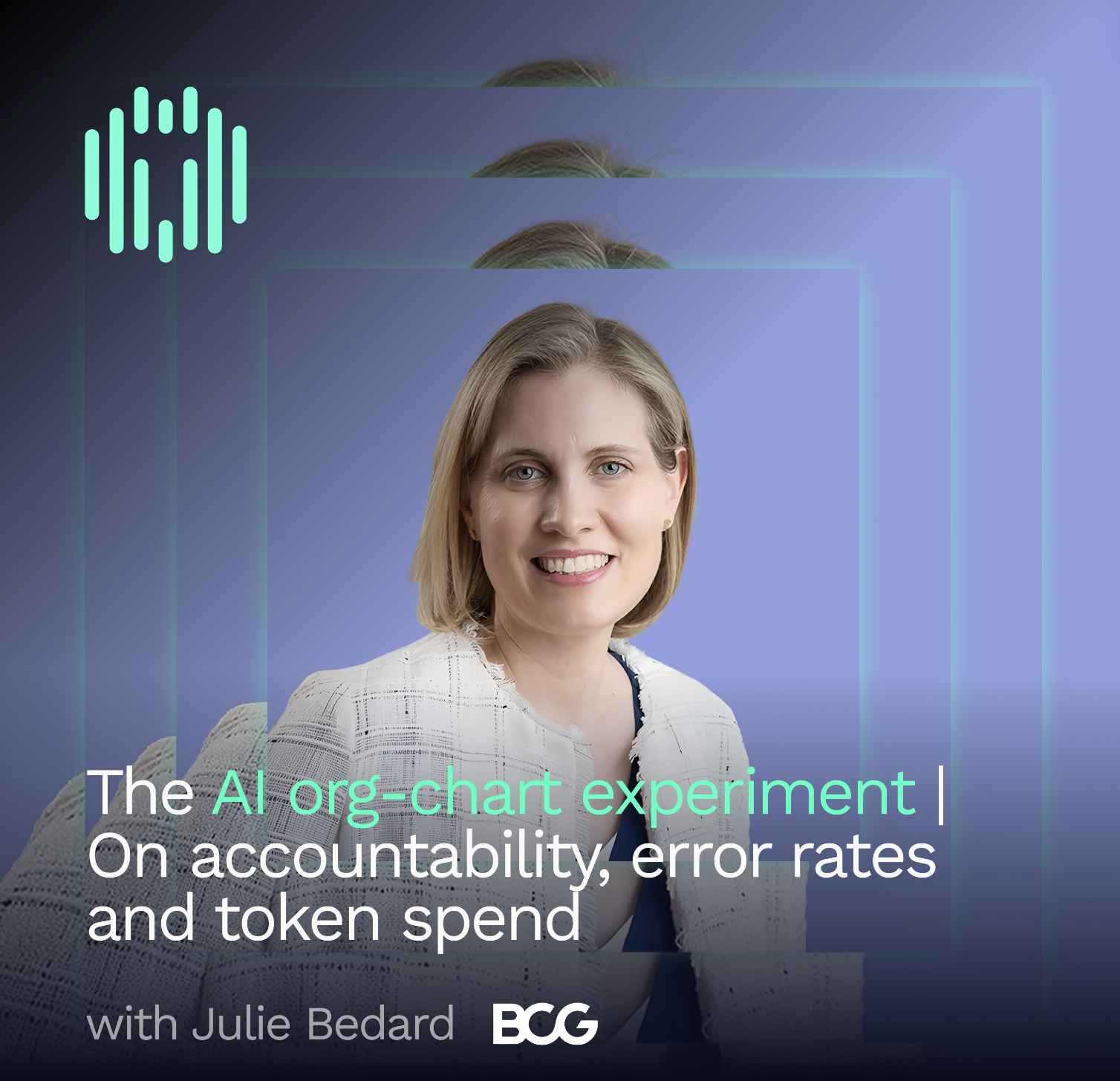
The AI org-chart experiment | BCG's Julie Bedard on accountability, error rates and token spend


.webp)