

“HR has over-rotated on technology.” | Julia Johnson, SVP Global Talent Management at Cognizant, on why the employee experience decides AI adoption


Episode summary
Many HR teams treat AI as a tooling decision. Julia Johnson, SVP Global Talent Management at Cognizant, thinks talent leaders have over-rotated on technology. What decides success is how people experience the work, and that work gets done with the machine, not versus it.
Recorded in New York in June, a week into her role at Cognizant, the conversation draws on her years in talent leadership at IBM and Kyndryl. She explains why pay decisions still rest on a manager's judgment and why her team paused a performance management rollout at Kyndryl the same day managers pushed back. She closes with her view of the talent function in 2030: fewer people, more strategy.
Listen here
In this episode
- 02:29 The outdated assumption leaders still hold: that AI will do the thinking
- 04:49 Building for skills when job roles go stale as fast as they launch
- 06:32 Why HR has over-rotated on technology, and the preposition that fixes it
- 08:40 Augmented, not artificial: why pay decisions still need a manager's judgment
- 11:39 From a startup nanny's room to 350,000 people: culture at scale
- 16:16 The day Kyndryl paused its performance rollout after manager pushback
- 19:44 Ship at 80% or go back to the design? How to tell
- 21:40 Same technology, used differently: her six-month ambition
- 23:12 The head of talent in 2030: fewer people, more strategy
- 26:11 Why she rejects the claim that AI will displace people
- 27:52 Her question for the next guest
Key takeaways
- AI is built to find the needle in the haystack. That doesn't mean it found the needle you were looking for, so treat its output as an input, not the answer.
- HR has over-rotated on technology. How employees experience a new tool decides whether the way work gets done changes.
- The preposition matters: humans with a machine, not humans versus machines. Julia would rather call it augmented intelligence.
- On pay, a machine brings every manager the same complete data, from performance to market movement. The decision still belongs to the manager.
- Pausing Kyndryl's performance management launch after manager pushback cost nothing in the cycle and kept managers on board as champions.
- By 2030 she expects fewer people in each talent center of excellence, with far more of their time spent on strategy with the business.
- AI is changing jobs more than it is taking them.
Actionable insights
- Listen for the quiet feedback too. Thousands of managers with questions are easy to hear. Subtler signals only show up if you go looking for them.
- Be willing to pause, and say so fast. If managers aren't ready to champion a new process, tell them the same day what you heard and what you will do about it.
- Design with the end in mind. When you know where you're heading, you can decide whether to ship at 80% and improve, or put pencils down and redesign.
- Let tools gather the data, not make the call. Use technology to give every manager the same comprehensive picture for pay and succession, then hold managers to their judgment.
About the guest
Julia Johnson is SVP Global Talent Management at Cognizant, reporting to CHRO Kathy Diaz. Before Cognizant, she held talent and HR leadership roles at IBM and Kyndryl, where she helped stand up the company after its spin-off from IBM, before returning to IBM. She started her career as the second employee at Don Peppers and Martha Rogers' one-to-one marketing startup.
Related episodes
“HR has over-rotated on technology.” | Julia Johnson, SVP Global Talent Management at Cognizant, on why the employee experience decides AI adoption
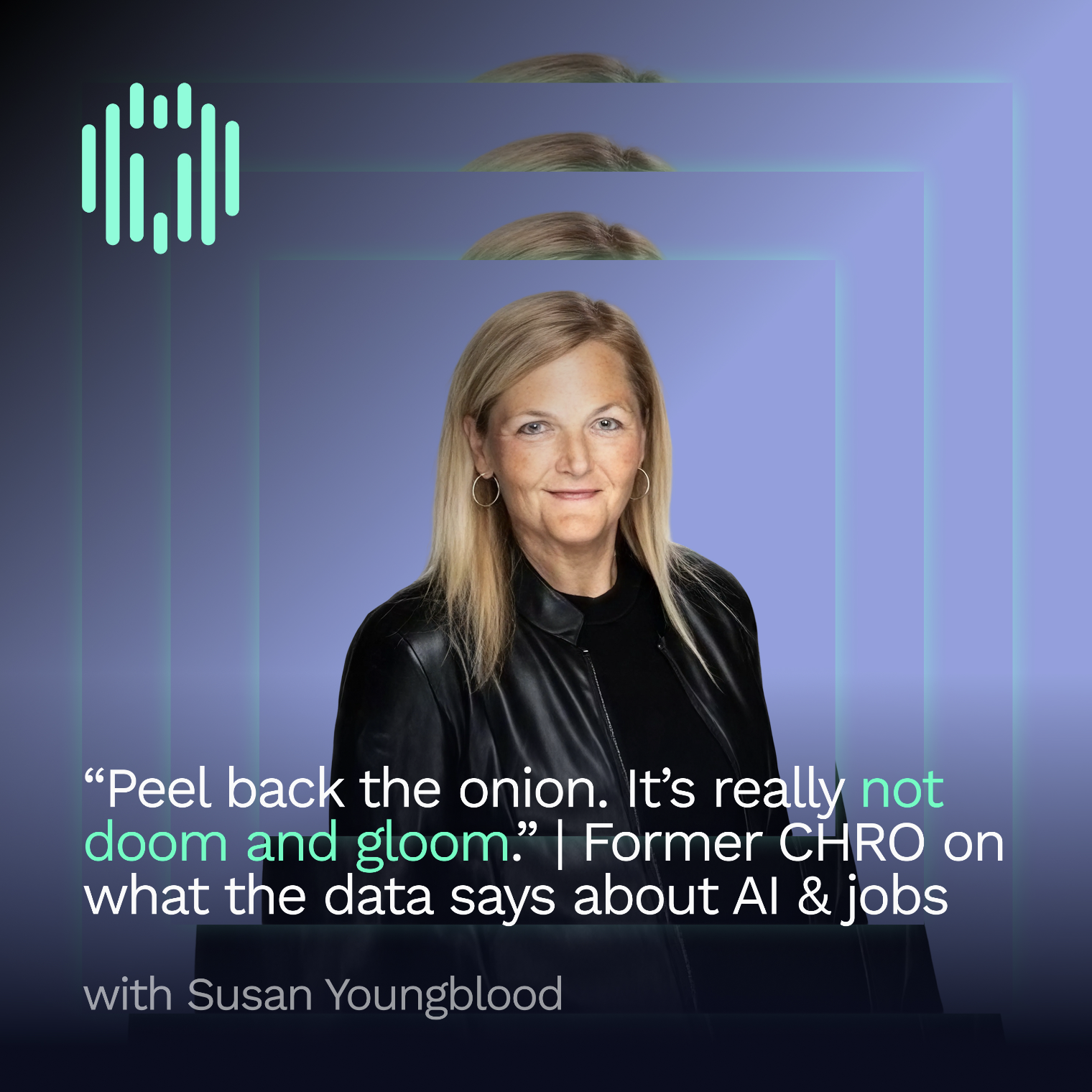
“Peel back the onion. It’s really not doom and gloom.” | Former CHRO Susan Youngblood on what the data says about AI and jobs